
Last updated November 15, 2026
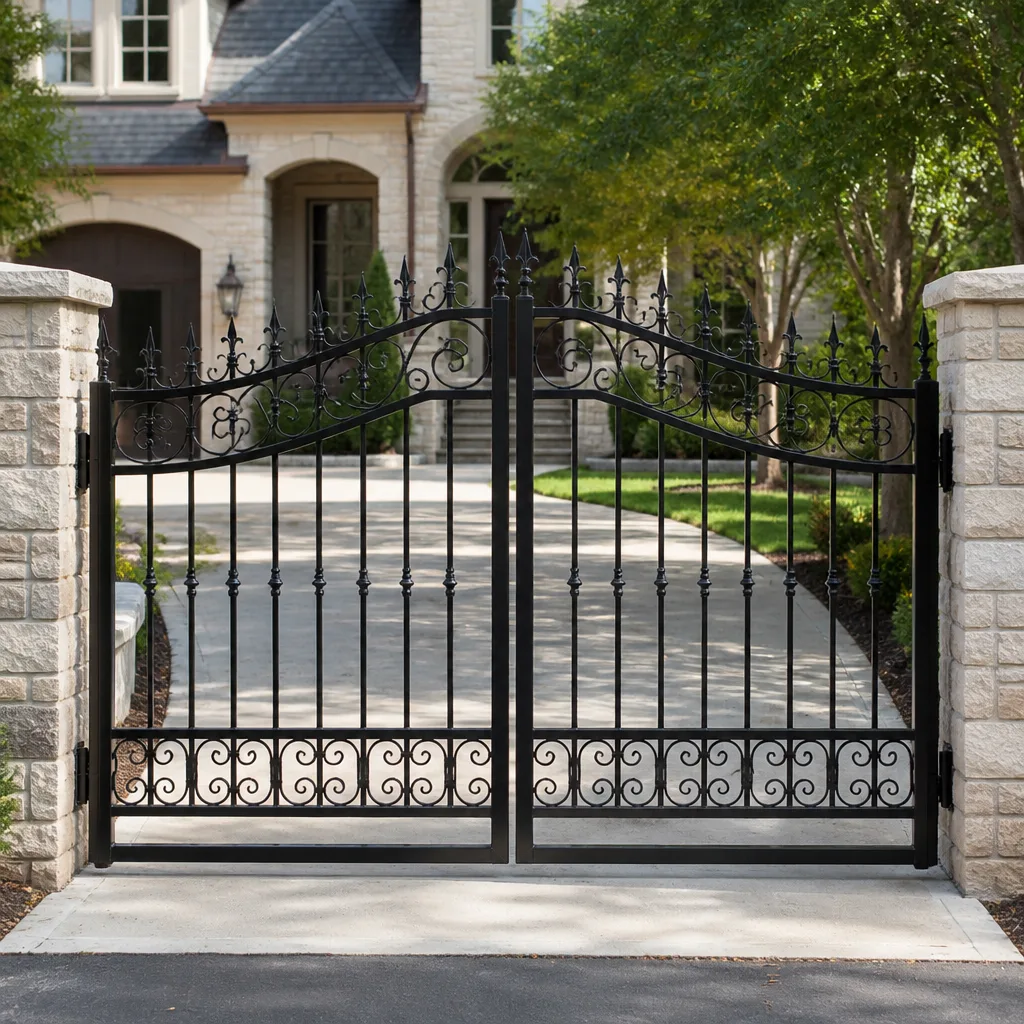 Wrought iron
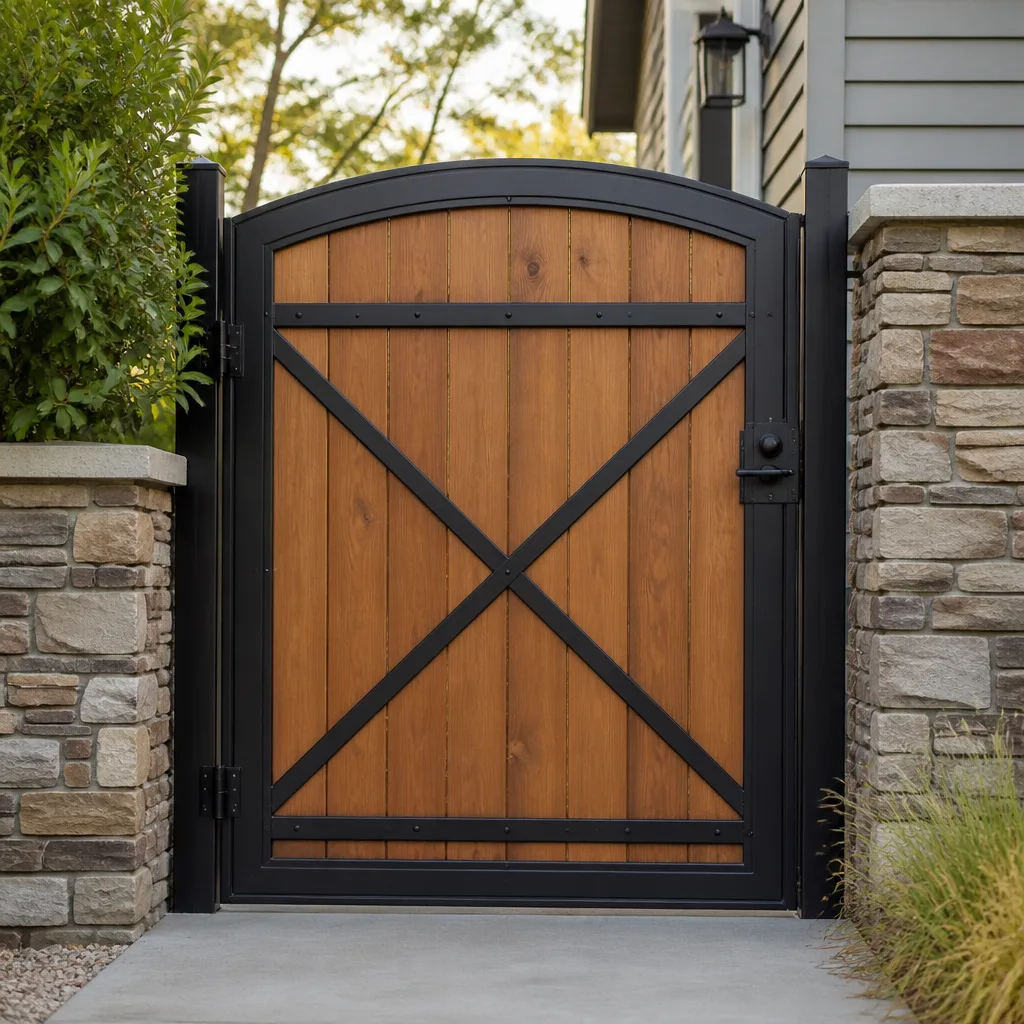 Wood & steel frame
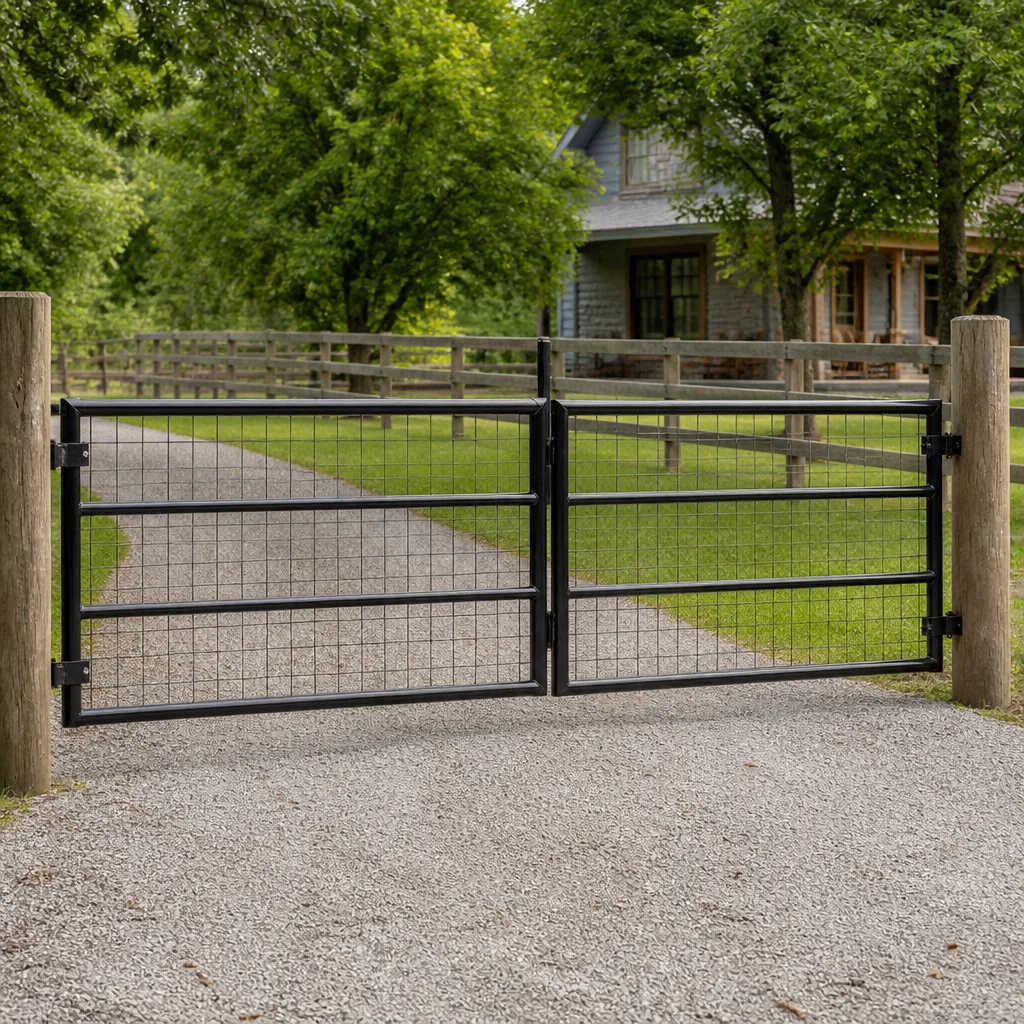 Farm & ranch
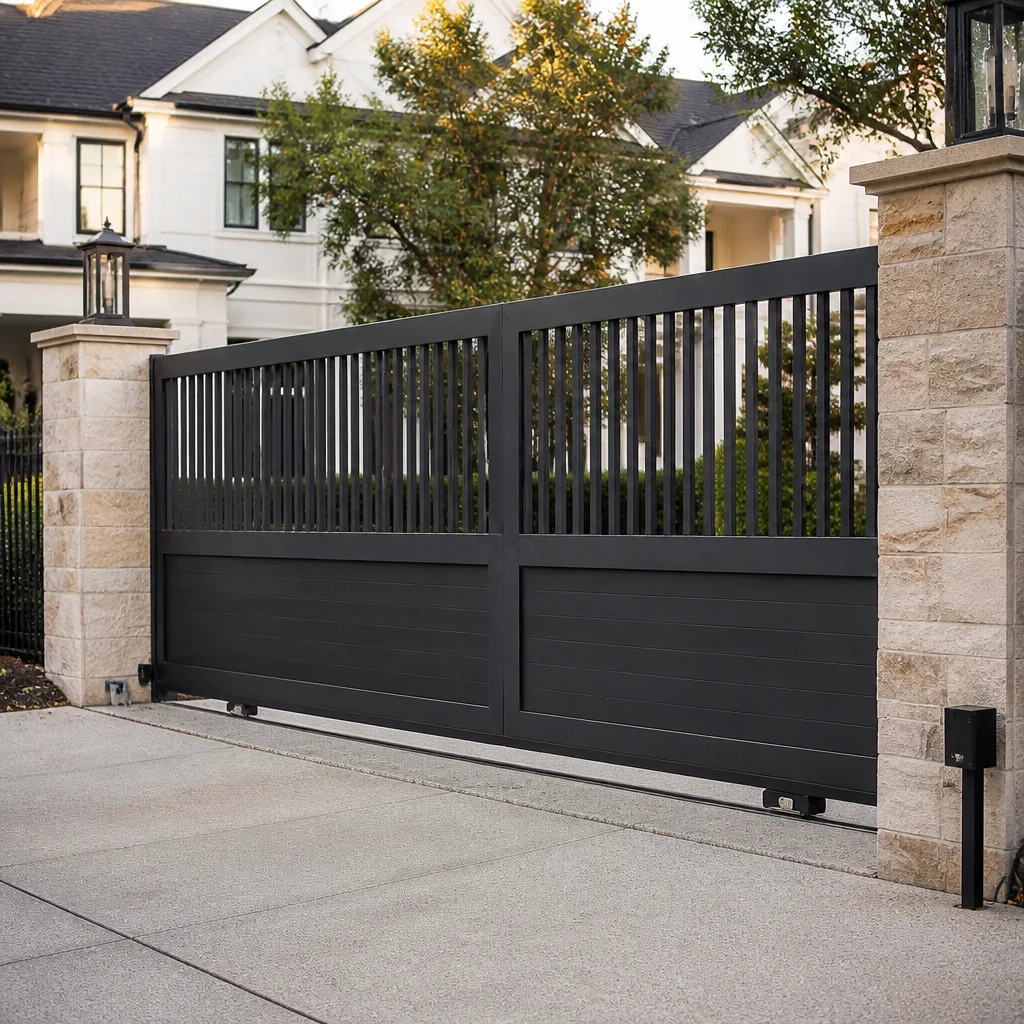 Sliding driveway gates
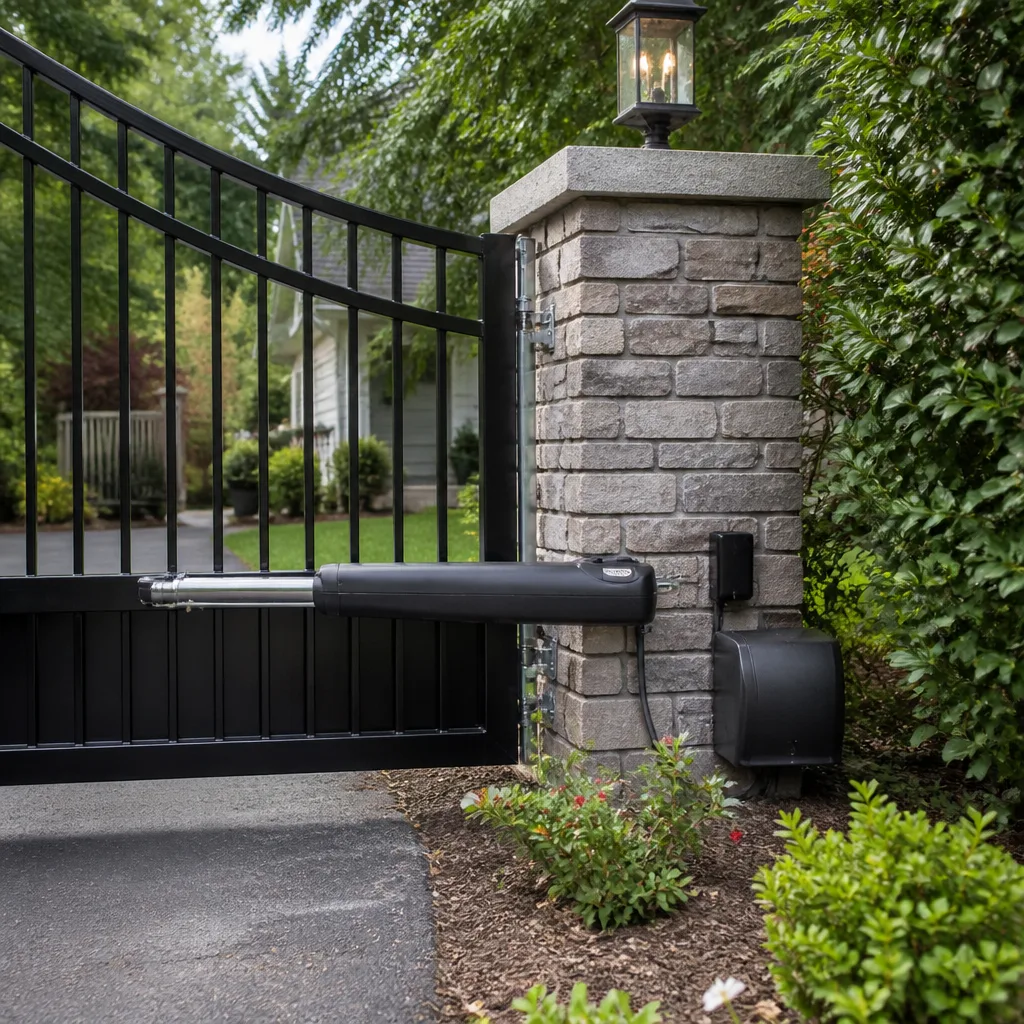 LiftMaster operators
Free on-site gate assessment - hinges, posts, and your LiftMaster or Nice gate operator checked before anything is quoted
The assessment is free and the quote is the invoice.
Get your free estimateThe Complete Guide to Gate Repair in Renton
A gate that reverses before closing isn’t a gate problem. It’s almost always a photo-eye or limit-switch signal issue, and replacing the gate panel won’t fix it. Most homeowners in Renton spend money in the wrong place because no one ever explained how the system actually communicates – operator, controller board, safety sensors, power supply, and mechanical hardware all talking to each other. In this guide we map all five components, separate the failures that Renton’s wet climate causes from ordinary mechanical wear, and walk through the diagnostic sequence a specialist uses to find the root cause. You’ll learn when a repair genuinely extends system life and when it only delays an operator replacement.
Quick Answer
Gate repair in Renton means diagnosing a whole system, not just the gate panel. Most failures trace back to the operator, controller board, safety sensors, power supply, or mechanical hardware, and the correct fix depends on which one has failed. A specialist identifies the faulty component before quoting work, so a $200 signal repair doesn’t get sold as a $2,000 replacement. Call (866) 293-5161 for a free estimate.
Styles & brands we work with
- Wrought iron
- Wood & steel frame
- Farm & ranch
- Sliding driveway gates
- LiftMaster operators
Table of Contents
- How a Gate System Actually Works: The Five Interdependent Components
- Which Gate Failures Are Specific to Renton’s Wet Climate
- Why Your Operator Brand Determines the Repair Approach
- The Diagnostic Sequence a Specialist Uses
- Repair vs. Replace: When a Fix Extends System Life
- Electric Gate Repair: Wiring, Operators, and Safety Edges
- What a Full Gate Installation Involves in Renton
- What Gate Repair Costs in Renton
How a Gate System Actually Works: The Five Interdependent Components
Every automated gate – from a Mighty Mule driveway opener to a FAAC commercial swing operator – is a network of five parts that must all agree before the gate moves safely. When one sends a wrong signal, the others react in ways that look like a different failure entirely. That’s why we start every job by mapping the system.
The five components are:
- The operator (motor): the actuator that physically moves the gate. It’s the most visible part and the one most people blame first, but it’s often just following bad instructions.
- The controller board: the brain. It reads sensor input, decides direction, handles soft-start and soft-stop, and logs faults. A board with a failed relay or a corroded terminal can mimic a dead motor.
- The safety sensors: photo-eyes, loop detectors, and safety edges. These tell the controller whether the path is clear. A dirty or misaligned photo-eye is the single most common cause of a gate that stops, reverses, or refuses to close.
- The power supply: the transformer, battery, and low-voltage wiring feeding the board. Voltage sag from a failing battery or a corroded connection causes erratic behavior that looks like a software glitch.
- The mechanical hardware: hinges, rollers, tracks, chains, and the gate leaf itself. A sagging hinge loads the operator beyond its spec and triggers overload faults.
When you understand these five parts as a system, the question changes from “why is my gate broken?” to “which component is sending the wrong signal?” That shift is what separates a methodical diagnosis from guesswork. We’ve built our whole approach to gate repair around it, and it’s the reason we can often identify the fault before we arrive.
Which Gate Failures Are Specific to Renton’s Wet Climate
Renton sits in a climate with long, wet winters and cool, damp shoulder seasons. That has a direct effect on gate systems, and it produces a set of failures you’ll see here more often than in drier parts of the country. Knowing which problems are climate-driven helps you decide what’s worth a repair versus what needs a component replaced.
Failures that show up more in wet weather:
- Corroded controller terminals: moisture works into control boxes and causes green buildup on low-voltage terminals. The gate starts behaving unpredictably, fault codes appear, and the board looks dead when it’s actually just a bad connection. Cleaning and resealing the enclosure often restores function.
- Water in the operator housing: failed gaskets and seals let water into motor housings and gearboxes. Once water mixes with the lubricant, wear accelerates fast. Checking the seal is one of the first things we do on any swing operator in Renton.
- Photo-eye false trips: rain, fog, and standing water on a lens or reflector cause intermittent safety tripping. A gate that works on a dry afternoon but reverses in the rain is telling you the sensor alignment or lens condition needs attention.
- Swollen hinges and rusted rollers: constant dampness and organic debris swell wooden gate frames and rust steel hardware. The resulting drag loads the operator and shortens motor life.
- Battery and standby power faults: low-voltage systems depend on a healthy battery to hold memory and handle power interruptions. Cold and damp shorten battery life, and a weak battery causes the gate to behave like it has a controller fault.
Universal mechanical wear still happens – bushings wear, chains stretch, springs in the operator gearbox fail. But in Renton, expect the wet-climate list to come up first. A gate that misbehaves only in the rain is a very different job from one that fails in any weather.
Why Your Operator Brand Determines the Repair Approach
The brand of your operator isn’t a detail – it dictates how the system is diagnosed, what parts it takes, and how long the job runs. A technician who doesn’t know your brand is learning on your gate. That’s why brand familiarity shortens diagnosis and reduces repeat visits.
Operators differ in real, concrete ways. A Mighty Mule residential swing operator is built for a homeowner install and has a different control architecture from a LiftMaster or a commercial-grade FAAC. A BFT actuator has its own fault logic and its own quirks that only come out after you’ve worked on enough of them. DoorKing entry systems and loop detectors behave differently again from a Ghost Controls driveway opener. Same symptom on the surface – “gate won’t open” – but different diagnostic path underneath.
We’re proficient across nine gate-operator brands: LiftMaster, FAAC, BFT, Linear, Viking, Ghost Controls, DoorKing, Elite, and Mighty Mule. That covers entry-level residential through commercial and multi-tenant systems, which matters if you manage an HOA gate or a small commercial property in Renton. Being familiar with a brand means we know the terminal layout, the fault-code meanings, and the common failure points before we open the control box.
What you want to avoid is a generalist who treats the gate as an electrical box and the operator as a motor. A specialist reads the brand’s specific behavior and diagnoses from there. If your operator is on the list, tell us the brand when you call – it helps us arrive prepared.
The Diagnostic Sequence a Specialist Uses
A specialist doesn’t start by ordering parts. The diagnostic sequence isolates whether the fault is electrical, mechanical, or software, in that order, because the electrical layer is the foundation the rest depends on. Here’s the sequence in the order we use it:
- Observe the failure firsthand. Does the gate move at all? Does it reverse mid-travel? Does it stop at a certain point? The behavior pattern narrows the fault before we touch a tool.
- Check power and voltage. Measure the supply at the controller and the battery under load. Low voltage or a sagging battery explains a surprising number of “dead gate” calls and is cheap to rule out.
- Read the controller’s fault indication. Most boards have status LEDs or a fault display. A technician who knows your brand’s codes translates the blink pattern directly into a component.
- Test the safety sensors. Break the photo-eye beam manually and watch the controller’s reaction. A sensor that doesn’t register a break, or that registers a false break in rain, is the culprit. Loop detectors get tested the same way.
- Test the operator in manual mode. Disengage the operator and move the gate by hand. If it’s stiff or binds, the fault is mechanical (hardware, hinges, track). If it moves freely but the motor struggles, the fault is in the operator.
- Inspect the mechanical hardware. Hinges, rollers, chain tension, gate leaf sag. Mechanical drag is diagnosed last because the electrical checks are quicker and rule out the most common causes first.
- Confirm the fix and re-test. Once the faulty component is identified and fixed, we run a full cycle and re-test every safety sensor before we consider the job done.
This sequence is what keeps us from treating symptoms. A gate that reverses before closing gets the photo-eye and limit-switch test first, not a new panel. Working the sequence in order is why a free estimate from us is a real diagnosis rather than a guess. If you’re in Renton and your gate is misbehaving, that diagnostic work is where electric gate repair starts.
Repair vs. Replace: When a Fix Extends System Life
A repair extends your system’s life when the failing component is one of the five you mapped and the rest of the system is sound. A replacement makes more sense when the operator itself is at the end of its service life and repairs start stacking up. The honest answer comes from the diagnosis, not from a preference for selling operators.
Repair makes sense when:
- A photo-eye, safety edge, or loop detector is the fault. These are isolated components and replacing one restores the whole system.
- A single relay or terminal on the controller board has failed and the board can be repaired or the connection restored.
- A battery, transformer, or piece of low-voltage wiring has failed. Power components are replaceable and don’t affect the operator’s internals.
- A hinge, roller, or section of track is dragging the gate. Fixing the mechanical drag removes the load on the operator.
Replacement makes more sense when:
- The gearbox or motor has failed due to water ingress and internal wear. A motor rebuild on a residential operator is rarely worth it.
- Repairs on the same operator keep recurring within a short window. Each visit is a symptom of the core wearing out.
- The operator is obsolete and parts are no longer made for it. A repair you can’t source parts for isn’t a repair.
- The system can’t meet current safety expectations – no functioning safety edges or sensors on a commercial swing gate.
We’ll tell you which one actually makes sense for your system. A gate in Renton that needs a $200 signal repair shouldn’t be sold a $2,000 replacement, and a 20-year-old operator draining money on every visit shouldn’t be patched indefinitely. That honesty is the whole point of diagnosing first.
Electric Gate Repair: Wiring, Operators, and Safety Edges
Electric and automated gate repair is a specialist’s job, not a general handyman’s. The dangerous parts are the operator’s wiring and the high voltage feeding it, plus heavy gate panels that can crush and slide gates that come off the track. We handle the diagnosis and repair, and we point out when a safety problem needs addressing.
What electric gate repair covers:
- Operator failures: the actuator doesn’t run, runs in one direction only, or stalls mid-travel. This is the motor and its control logic.
- Controller and board faults: the brain of the system. Fault codes, dead terminals, relays that have failed, or a board that won’t accept input.
- Safety sensors and edges: photo-eyes, loop detectors, and safety edges that are misaligned, dirty, damaged, or wired incorrectly so the gate can’t safely close.
- Wiring and power: low-voltage control wiring that’s been damaged by rodents, water, or age; transformers and batteries that no longer hold.
- Limit switches: the sensors that tell the operator where the open and closed positions are. A failed limit switch causes the gate to overshoot, reverse, or stop short.
If your gate reverses before it closes, a photo-eye or limit-switch signal issue is almost always the cause – not the gate panel. Working on the operator’s power side involves mains voltage and moving heavy panels, so we recommend a trained professional for anything beyond a visual check and a call to us. We answer 24/7, and fast dispatch runs from 7am to 7pm.
What a Full Gate Installation Involves in Renton
A full gate installation is a measured, planned job, not a same-day swap. It starts with a free on-site measure to understand the driveway width, slope, and how the gate needs to open, then a written price before anything is ordered. Installation work is scheduled, which is why we quote a measure and a written price rather than promising a same-day arrival.
The installation process includes:
- On-site measure and site review. We look at gate swing clearance, driveway grade, and where the operator will mount. Slope matters: a gate on a steep driveway needs a different operator than a flat one.
- Operator and system selection. Based on the gate weight, style, and how you’ll use it – a residential LiftMaster driveway operator versus a commercial FAAC swing system, for example. We match the operator to the job, not the other way around.
- Footings and posts. Gate posts go to proper footing depth for the weight and swing. Undersized footings are the number one cause of a gate that sags over time.
- Power and control wiring. The electrical supply, low-voltage control runs, and where the safety sensors and any entry system will go. If power needs to be run to the gate, that’s planned here.
- Safety edges and sensors. Every automated gate needs functioning safety edges and photo-eyes to stop and reverse on obstruction. This is non-negotiable, especially for commercial and multi-tenant gates.
- Commissioning and testing. We set the limits, verify soft-start and soft-stop, and run every safety sensor through a full cycle before we hand it over.
This is a single-company scope: repair, electric-system service, and installation with no hand-offs between contractors. Because a gate is a long-term investment, the measure and the written price come before any order is placed. If you’re planning a new automated gate in Renton, start with a free measure and estimate.
What Gate Repair Costs in Renton
How much gate repair costs in Renton depends entirely on which component has failed, and that’s why we diagnose before quoting. Pricing is set per job by the written estimate, and the price is quoted and agreed before any work starts. The most common repairs fall into a few cost bands, shown below as typical ranges to help you plan.
- Safety sensor or photo-eye repair: $150 – $350 typical. The most common fix and the one most likely to explain a gate that reverses or won’t close.
- Controller board diagnosis and repair: $200 – $450 typical, often less than a full board replacement.
- Battery, transformer, or low-voltage wiring fix: $150 – $300 typical.
- Hinge, roller, or track repair: $200 – $400 typical, depending on how many parts are worn.
- Operator motor repair or replacement: $500 – $1,500 typical for the operator itself, varying by brand and gate weight.
- Full new installation: quoted per job after a site measure, because the gate, operator, and power run all change the total.
These are typical estimates, not a fixed price list. The written estimate sets the final price for your specific gate, and that number is agreed before we start work – no surprise invoice at the end. We don’t quote over the phone for a repair we haven’t diagnosed. For a free estimate, call (866) 293-5161. We answer 24/7, and fast dispatch runs from 7am to 7pm, Sunday through Friday.
Common Mistakes to Avoid
- Replacing the gate panel when the fault is a sensor. A gate that reverses before closing is almost always a photo-eye or limit-switch signal issue. Replacing the panel won’t fix a communication problem the operator is reporting.
- Assuming a dead gate means a dead motor. Low voltage from a failing battery or corroded terminals mimics a dead motor. Measure the power before replacing the operator.
- Ignoring rain-only failures. In Renton, a gate that only misbehaves when it’s wet is telling you the sensors or seals have a moisture problem. Waiting for it to fail dry makes the repair bigger.
- Letting mechanical drag load the operator. A binding hinge or rusted roller makes the motor work harder than it’s rated for. Fix the drag before it wears out the gearbox.
- Hiring a generalist who learns your brand on the job. The brand of your operator decides the diagnostic path. A generalist who treats your FAAC like a Mighty Mule will take longer and miss the real fault.
- Treating a controller fault as unfixable. A single failed relay or a corroded terminal is often repairable. Ask for a diagnosis before agreeing to a board replacement.
- Skipping the site measure on installation. A new gate quoted without a measure on the actual driveway grade is a quote on a different job. Get the measure first.
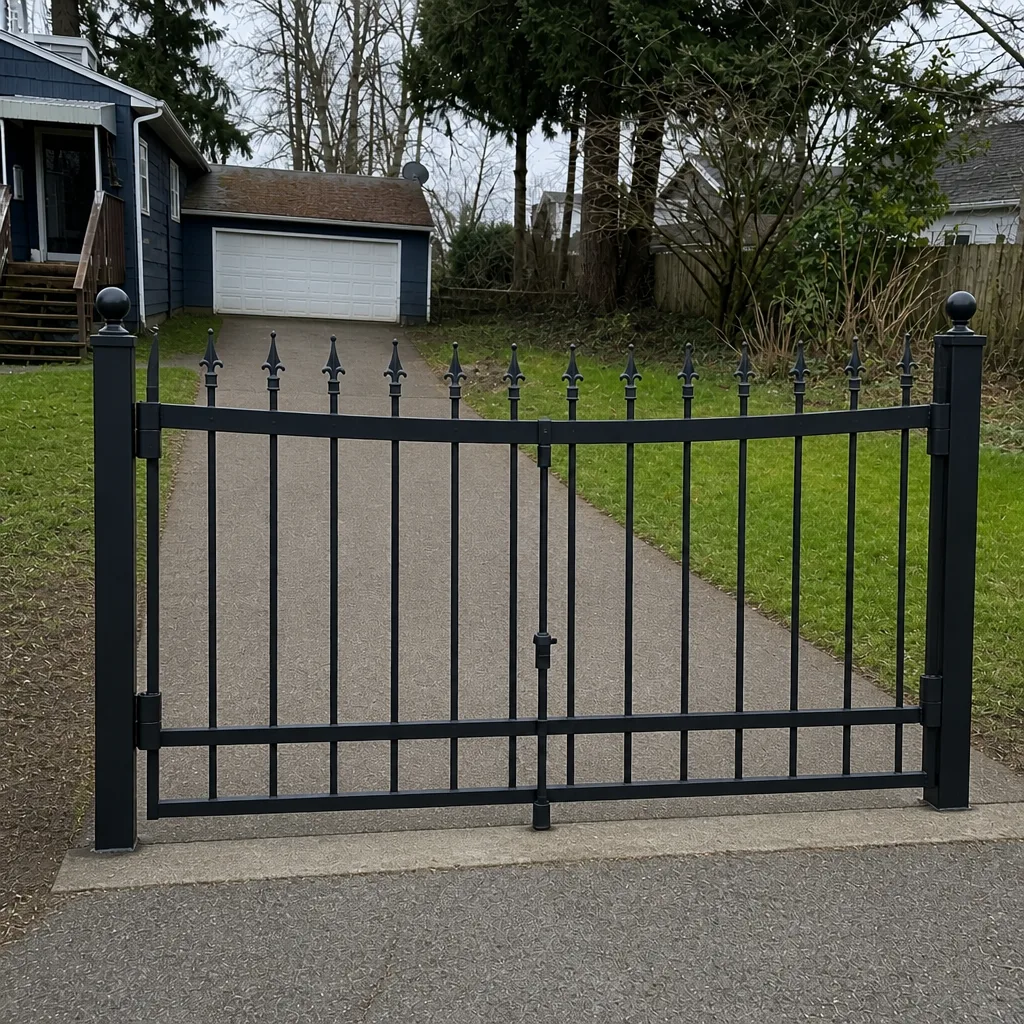
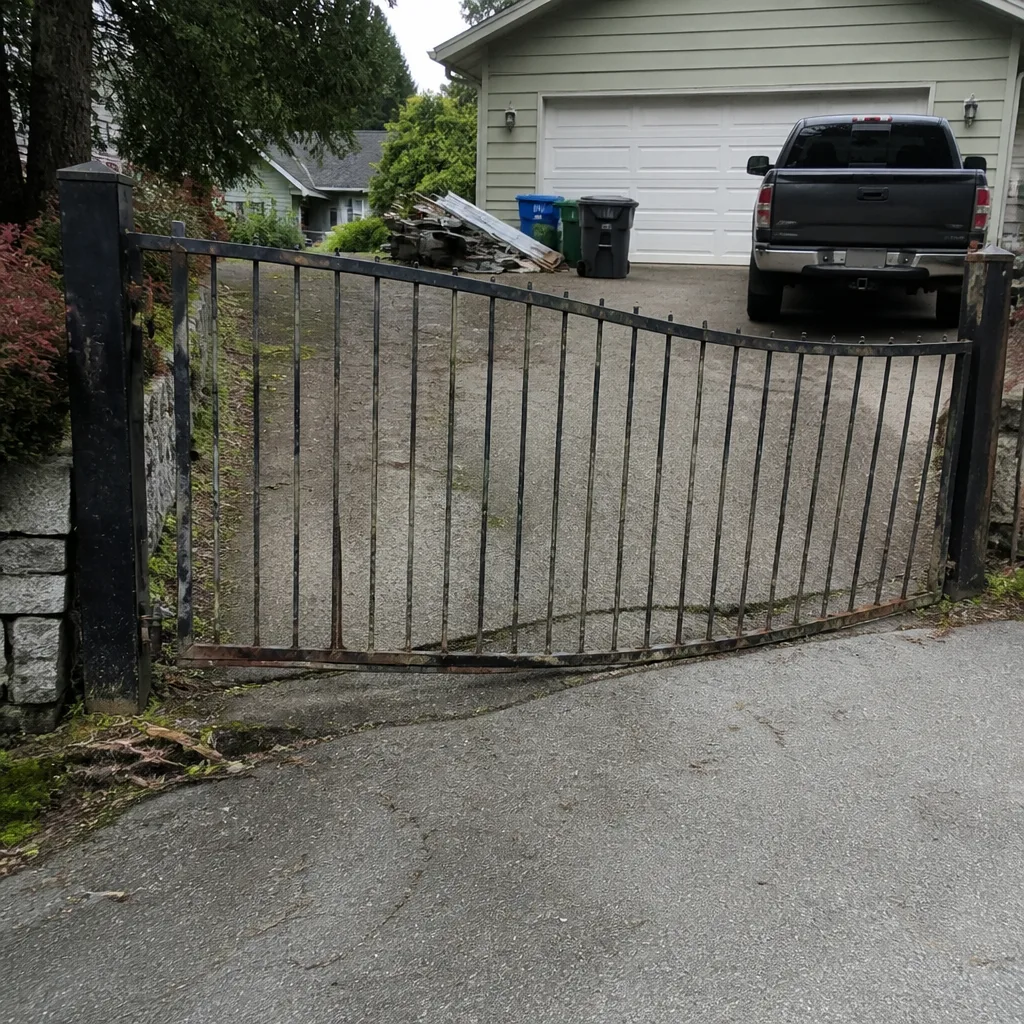
See the difference
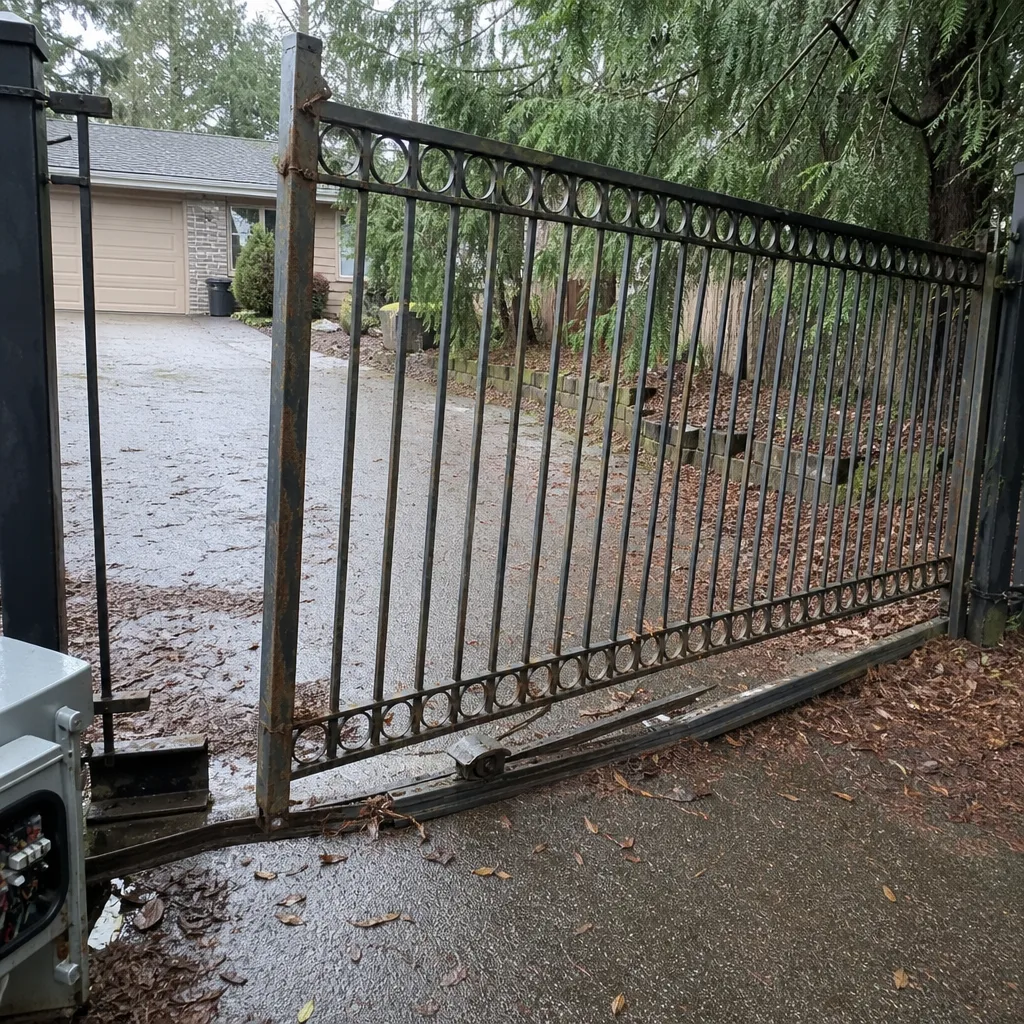 Before
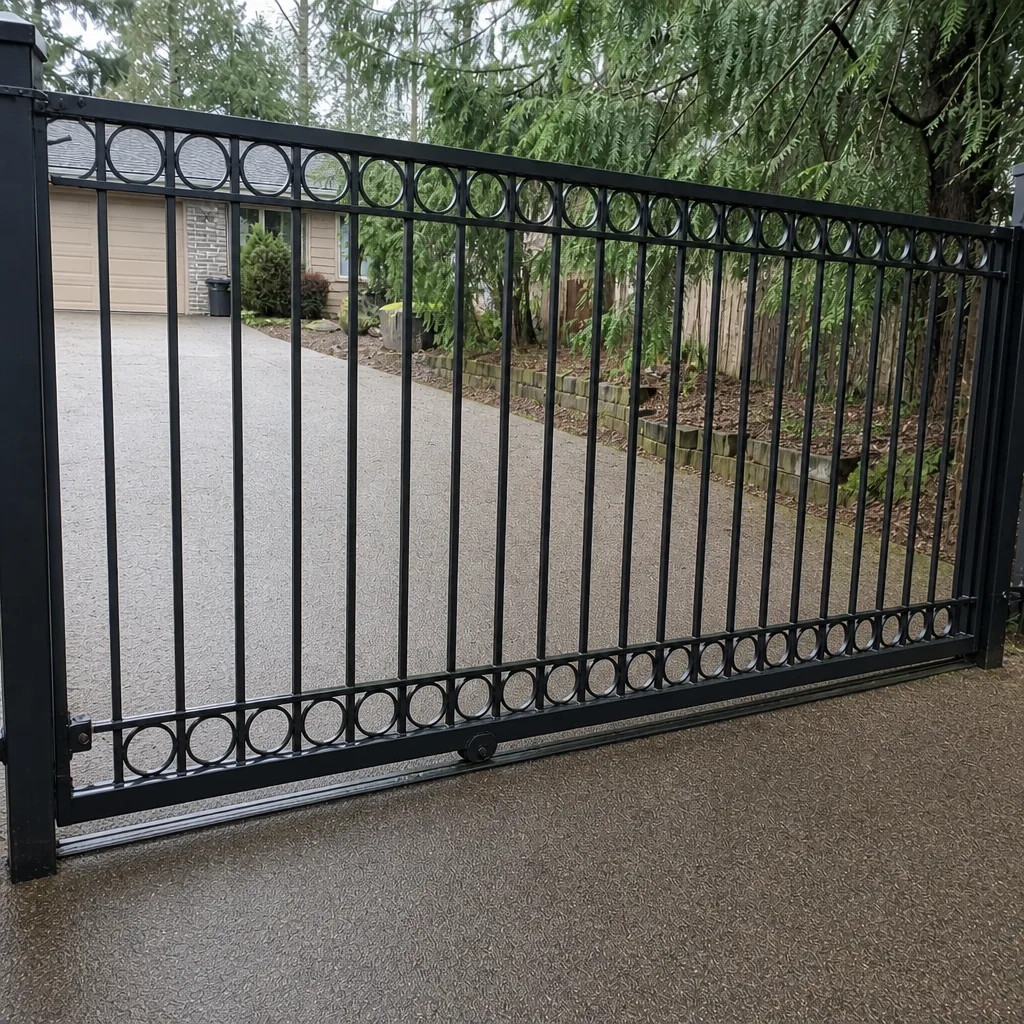 After
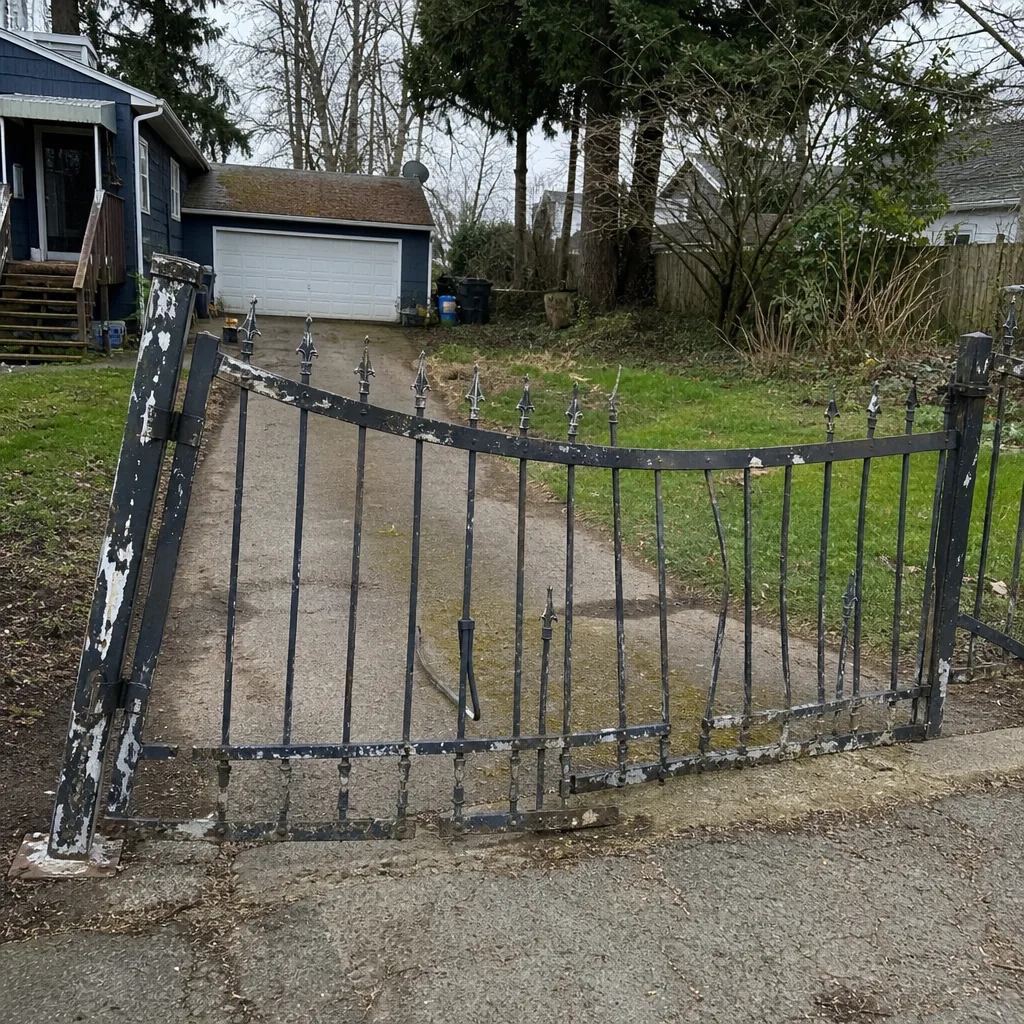 Before
 After
 Before
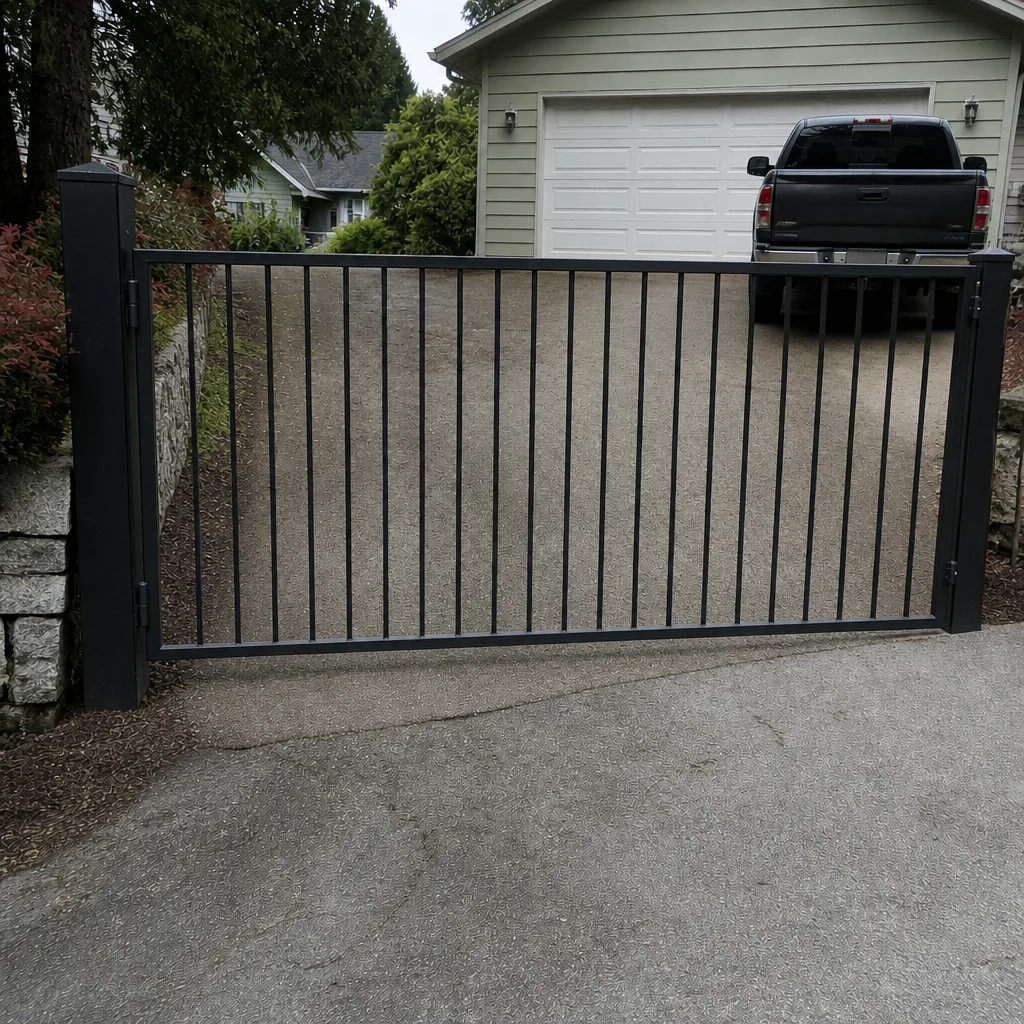 After
When to Call a Professional
Call a professional when the gate won’t move under power, reverses or stops mid-travel, opens on its own, or reports a fault you can’t clear. Call us immediately if you see damaged wiring, a burning smell near the control box, water inside the operator housing, or a gate leaf that sags and drags. These are safety issues on a gate that weighs enough to hurt someone or trap a vehicle. Operator power-side work involves mains voltage and heavy panels, so we recommend a trained professional for anything past a visual check. For a symptom you’re unsure about, mention your operator brand – LiftMaster, FAAC, BFT, or any on our list – so we can diagnose from the right starting point. Gate Repair Renton offers free estimates in Renton – call (866) 293-5161. We answer 24/7, and fast dispatch runs from 7am to 7pm, Sunday through Friday. Closed Saturday.
Frequently Asked Questions
A gate that reverses before closing is almost always a safety sensor or limit-switch signal issue, not a gate panel problem. The photo-eye or the limit switch is telling the controller the path isn’t clear or the position is wrong, so it reverses to be safe. The fix is to diagnose and correct the sensor, not to replace the panel. Call (866) 293-5161 for a free estimate.
Gate repair in Renton typically runs from about $150 for a sensor repair to $1,500 for an operator replacement, depending on the component. Sensor, battery, and hardware repairs sit at the lower end, while operator and controller work sit higher. The written estimate sets the final price, and it’s agreed before any work starts. Call (866) 293-5161 for an exact quote – estimates are free.
Same-day repair is often possible when the fault is a sensor, wiring, or mechanical issue that a technician can fix on the first visit. For operator or controller problems that need a specific part, we schedule the repair for the next opening. A free estimate starts the diagnosis. We answer 24/7, and fast dispatch runs from 7am to 7pm, Sunday through Friday.
We’re proficient across nine gate-operator brands – LiftMaster, FAAC, BFT, Linear, Viking, Ghost Controls, DoorKing, Elite, and Mighty Mule – covering entry-level residential through commercial operators. Because we know the brand’s control logic and common failure points, diagnosis is faster. Tell us your brand when you call (866) 293-5161.
Yes, wet weather drives a specific set of gate failures in Renton: corroded controller terminals, water in the operator housing, false photo-eye trips in rain, and swollen hinges that load the operator. A gate that only fails when wet has a moisture problem worth fixing now rather than when it fails dry. Call (866) 293-5161 for a free estimate.
Yes. A full installation covers the power run, low-voltage control wiring, and safety edges and sensors, all as part of the installation with no hand-offs. Every automated gate needs functioning safety edges and photo-eyes before it’s put into service. Installation work is measured and scheduled – start with a free measure and written price. Call (866) 293-5161.
The Bottom Line
Most gate failures in Renton aren’t gate problems. They’re one of five system components – operator, controller board, safety sensors, power supply, or mechanical hardware – sending the wrong signal, and the fix depends on diagnosing which one it is. Work the sequence: power, then fault codes, then sensors, then mechanical drag. Know your operator’s brand, because it decides the diagnostic path. And decide repair versus replace on what the diagnosis actually shows, not on a guess. When you’re ready, Gate Repair Renton offers free estimates – call (866) 293-5161. We answer 24/7, and fast dispatch runs from 7am to 7pm, Sunday through Friday. Closed Saturday.
Written by the team at Gate Repair Renton.