
Last updated November 15, 2026
 Wrought iron
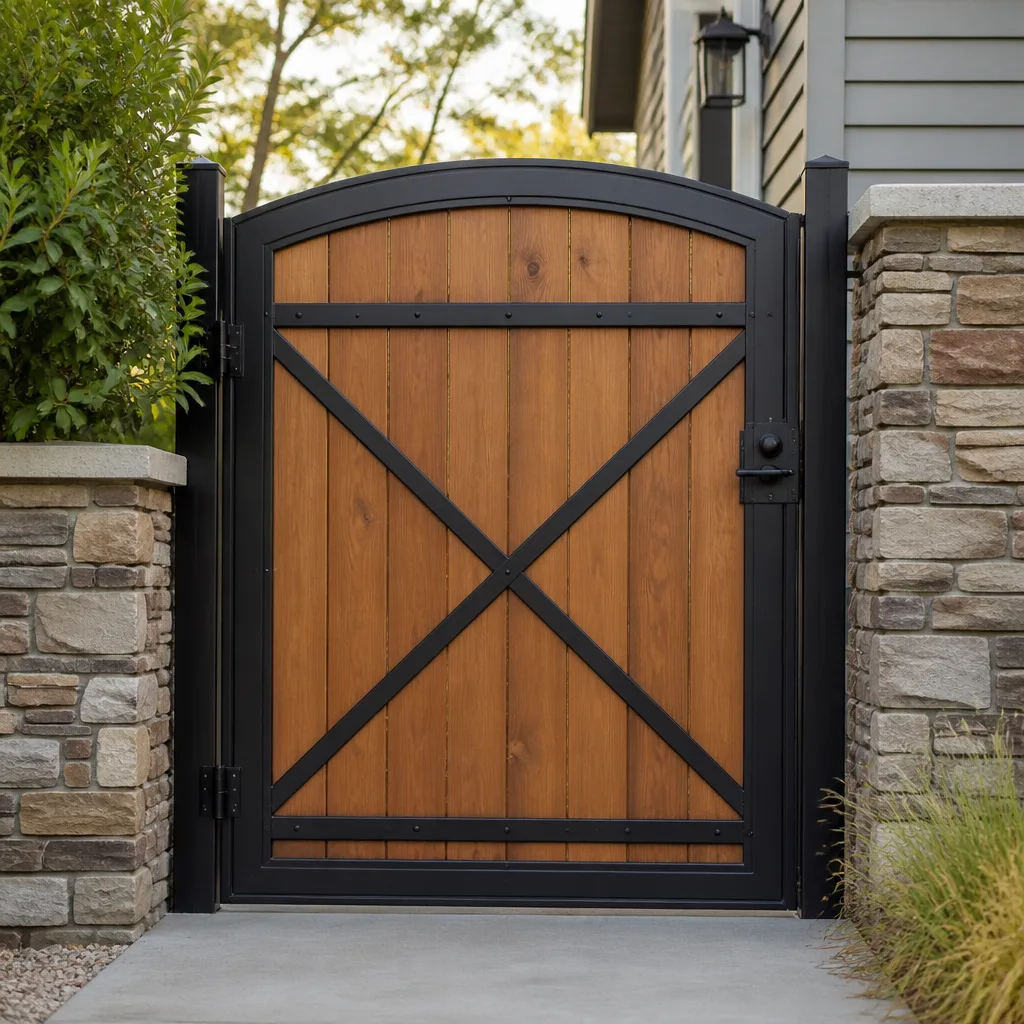 Wood & steel frame
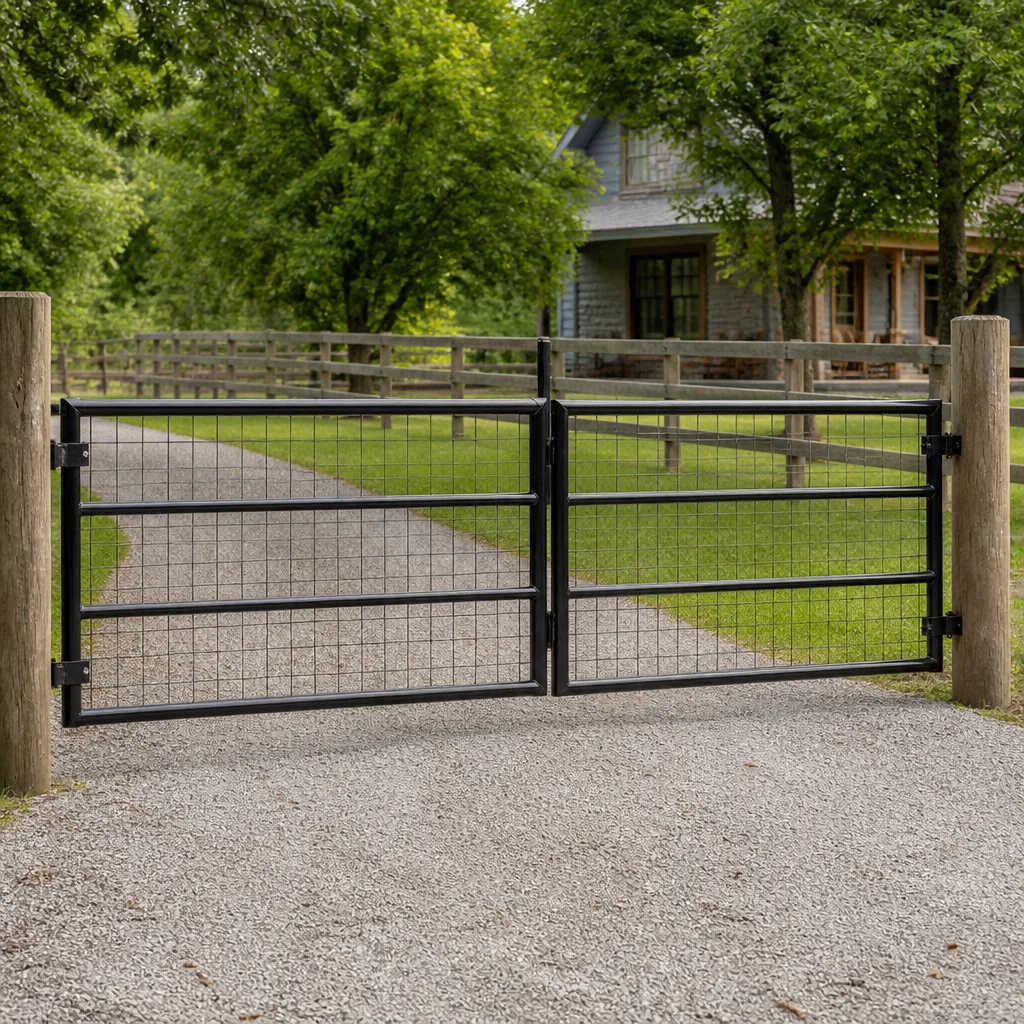 Farm & ranch
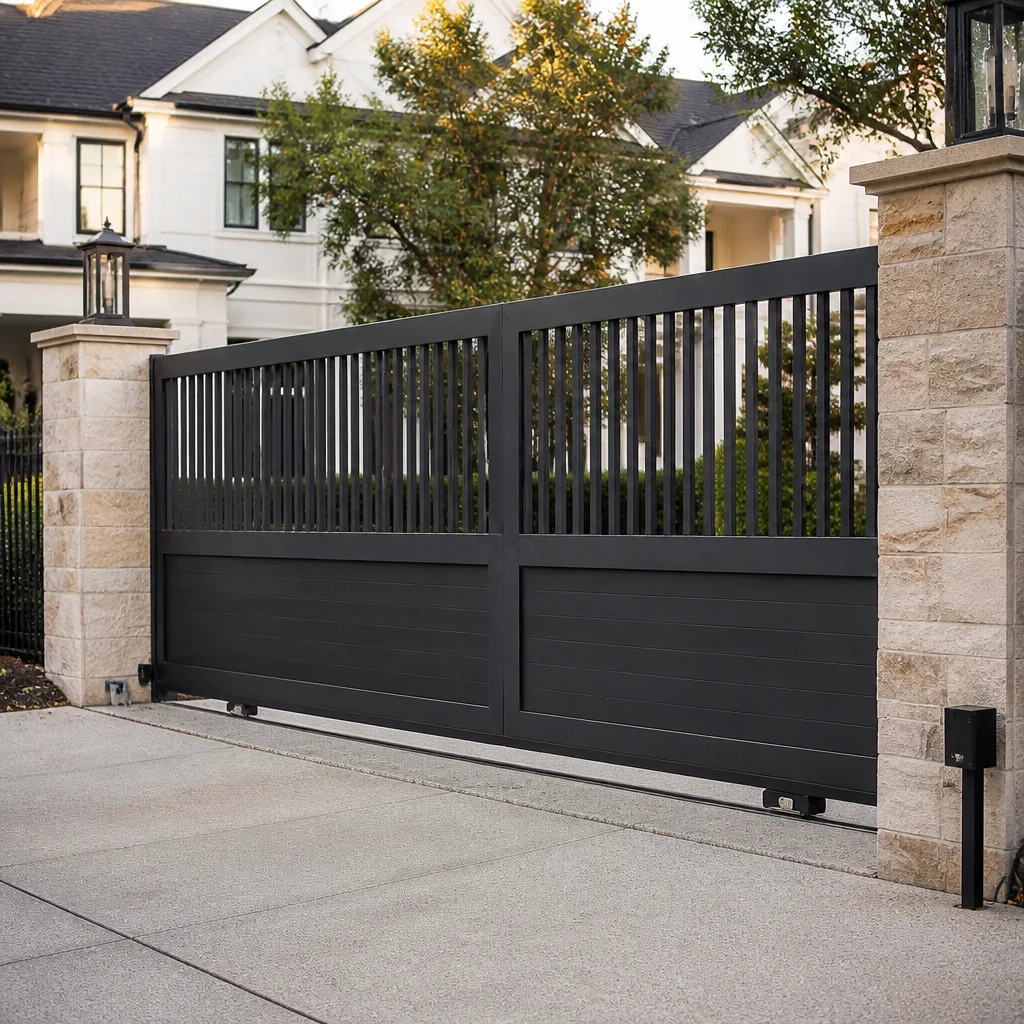 Sliding driveway gates
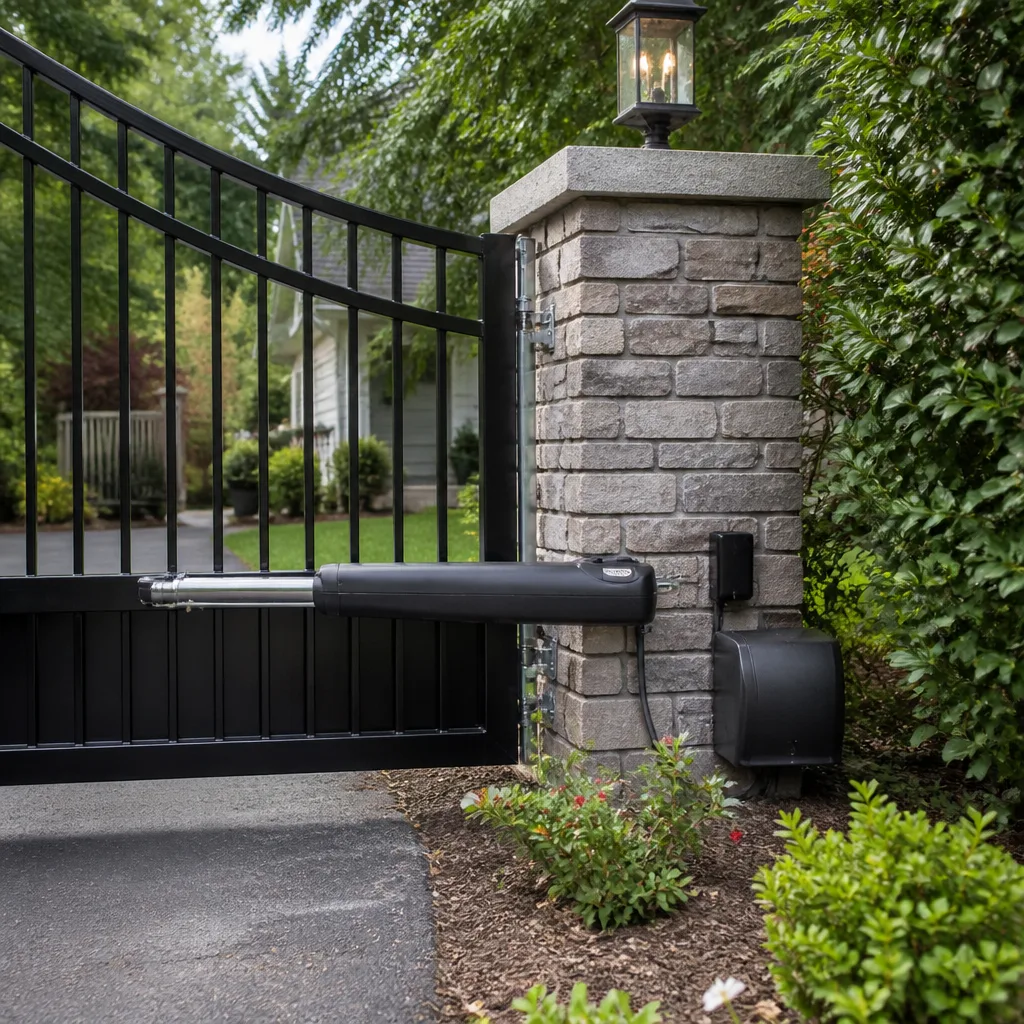 LiftMaster operators
Free on-site gate assessment - hinges, posts, and your LiftMaster or Nice gate operator checked before anything is quoted
The assessment is free and the quote is the invoice.
Get your free estimateGate Repair Maintenance Schedule: What to Do and When
The standard “annual tune-up” advice you’ll find online was written for a warm, dry climate. Renton doesn’t have one. Our wet winters, our freeze-thaw shoulder seasons, and the sheer volume of rain that falls between October and April put a completely different kind of stress on an automated gate. A chain that stays properly lubricated in Southern California can seize here. A photo-eye that never drifts in dry air can slide out of alignment in a wet one. We specialize exclusively in gates – repair, electric systems, and installation – and in this guide we’ll walk you through a layered maintenance calendar built around Renton’s seasons: what to check monthly, what to do every 90 days, what to handle before the rainy season, and what to save for spring.
Quick Answer
A gate maintenance schedule should run on layered intervals, not a single annual visit: monthly visual and safety checks, a 90-day electrical and lubrication inspection, a September pre-rainy-season electrical pass, a November freeze prep, and a March post-winter mechanical inspection. In Renton, the 90-day tasks matter most, because that’s where slow photo-eye drift, loose terminals, and worn chain links surface before they turn into a failure.
Styles & brands we work with
- Wrought iron
- Wood & steel frame
- Farm & ranch
- Sliding driveway gates
- LiftMaster operators
Table of Contents
- Why a Single Annual Tune-Up Fails in Renton
- The Monthly Check (10 Minutes)
- The 90-Day Electrical and Lubrication Inspection
- Lubrication by Component: Chain, Screw, and Hydraulic
- Battery Backup: The Load Test That Actually Works
- September: Pre-Rainy-Season Electrical Pass
- November Freeze Prep
- March: Post-Winter Mechanical Inspection
- Building a Maintenance Log That Spots Wear Early
Why a Single Annual Tune-Up Fails in Renton
A gate has three systems running on three different clocks. The mechanical system (chains, rollers, hinges, tracks) wears on a cycle-count basis. The electrical system (terminals, grounds, photo-eyes, loop detectors) degrades on a moisture-and-vibration basis. The software and control board run on their own logic and can sit quietly for years before one failed sensor input shuts the whole thing down. An annual visit catches whichever of those happened to be worst that day. The 90-day cadence catches all three before any of them becomes a repair.
Renton makes this especially true. Our rainy season runs roughly October through April, and the shoulder months around it bring freeze-thaw cycles that work fasteners loose and drive moisture into places it doesn’t belong. Underground loop detectors sit in soil that goes from saturated to frozen and back. Chain drives that stay wet for days at a time wear faster than the manufacturer’s cycle rating assumes. None of that shows up in a once-a-year look.
We see the consequence in our gate repair work every spring: gates that technically “worked fine last year” arrive in March with a seized chain, a corroded terminal block, or a photo-eye that’s been drifting two millimeters a month since November. Each of those would have been caught by a 90-day check. Each of them costs more to fix after a failure than it would have cost to prevent.
The Monthly Check (10 Minutes)
This is a walk-around, not a service call. It takes ten minutes, requires no tools, and catches the obvious problems before they compound. Do it the same day each month so it becomes a habit.
- Listen to the gate cycle. Run the gate a full open and close. Note any new grinding, squealing, clicking, or hesitation. A change in sound is the earliest signal of mechanical wear.
- Watch the travel speed. Does the gate move at the same pace it did last month? A gate that’s slow at one end of its travel usually has a worn roller or a binding track, not a failing motor.
- Test the safety reversal. Put an object in the gate’s path (a piece of cardboard, not your hand) and confirm the gate stops and reverses. Repeat at both the open and close cycles.
- Check the photo-eye alignment. Look at the indicator light on the receiving eye. If it’s flickering or dim, the alignment has drifted. Clean the lens first, then check again.
- Walk the track or swing path. Look for leaves, debris, ice, or anything that could jam the gate. On slide gates, check that the track itself is clear along its full length.
- Inspect the visible hardware. Look for loose bolts on hinges, brackets, and the operator mount. Do not tighten anything on the operator itself. Just note what’s loose.
Write down anything you notice in a log (more on that below). A monthly check that produces notes is a monthly check that’s working.
The 90-Day Electrical and Lubrication Inspection
This is the inspection that separates a gate that lasts from a gate that fails. It’s also the one most property owners skip, because nothing appears wrong. That’s the point: the failure modes it catches are the slow kind.
Electrical checklist
- Terminal connections: With power off, check that every terminal screw in the control box is snug. Vibration loosens them over months, and a loose terminal arcs, corrodes, and eventually fails. Do not overtighten; snug is enough.
- Ground wire integrity: Follow the ground wire from the operator to its grounding point. Look for corrosion, rodent damage, or a loose clamp. A weak ground causes intermittent faults that are hard to diagnose later.
- Photo-eye alignment drift: This is the quiet one. Photo-eyes drift gradually as the mounting brackets expand and contract with temperature. A pair aligned in July can be half a degree off by October. Check alignment with a straightedge, not just by watching the indicator light, because the light stays green longer than the beam stays true.
- Loop detector response: Drive a vehicle over each loop (or walk a metal object across it, depending on sensitivity) and confirm the gate responds. Note any delay or missed detection.
- Battery backup load test: See the dedicated section below. Do not skip this because the battery reads 12 volts on a meter.
Lubrication pass
Apply the correct lubricant to the correct components at the correct interval (the next section covers which is which). Wipe off old lubricant before applying new. Fresh lubricant over old grit is worse than no lubricant at all.
Because the electrical side involves live control boards and terminals, we recommend having a trained technician handle anything inside the control box. An electric gate repair specialist can read the board, check the terminals, and verify the safety inputs in a single visit. Call (866) 293-5161 for a free estimate.
Lubrication by Component: Chain, Screw, and Hydraulic
Using the wrong lubricant is one of the most common causes of premature gate failure, and it’s almost invisible until the damage is done. Chain drives, screw drives, and hydraulic operators each need a different product at a different frequency. Here’s how they differ.
Chain drives (LiftMaster, Ghost Controls, Linear, and similar)
Chain needs a chain-specific lubricant: a penetrating chain lube or a dry-film lubricant designed for exposed roller chain. Apply it every 90 days, more often in the rainy season. The chain should look wet when you finish and dry within a few hours as the carrier evaporates, leaving a film behind.
What goes wrong: using motor oil or grease on a chain. Both attract and hold grit, which turns the lubricant into an abrasive paste and wears the chain faster than running it dry. In Renton, a greased chain stays wet, holds road grit, and wears noticeably faster than one maintained with a proper dry-film lube.
Screw drives (Linear, some Viking operators)
Screw drives need a light grease, not a chain lube, and the interval is longer: every 6 months is typically enough. The screw should be wiped clean before re-greasing; old grease holds grit the same way old chain lube does.
What goes wrong: over-greasing. A screw drive packed with grease traps dirt and forces the motor to work harder. A thin, even coat is correct. If the manufacturer specifies a particular grease, use it.
Hydraulic operators (FAAC, BFT, and similar)
Hydraulic operators need the manufacturer’s specified hydraulic fluid, checked periodically and topped off per the manual. They do not need grease on the piston rod. In fact, grease on the rod attracts grit that damages the rod seal.
What goes wrong: mixing hydraulic fluids. Different fluids have different viscosities and additives, and mixing them can cause seal failure. When in doubt, use the brand-specific fluid. If your operator is a BFT or FAAC system, we already know what it takes.
Battery Backup: The Load Test That Actually Works
A backup battery that reads 12.6 volts on a meter can fail under load. Voltage tells you the battery has a charge; it doesn’t tell you the battery can deliver enough current to move the gate when the power’s out. The only test that answers the real question is a load test, and it should be done every 90 days.
- Disconnect the AC power to the operator at the breaker or the disconnect switch.
- Confirm the gate runs on battery alone. Run a full open and a full close cycle on battery power. A healthy battery moves the gate at close to normal speed. A weak one moves it slowly, stalls partway, or fails to complete the cycle.
- Measure the voltage during the cycle, not before it. If you have a meter, clip it to the battery terminals and watch the voltage while the gate is moving. A reading that drops below roughly 11.5 volts under load indicates a battery on its way out.
- Restore the AC power and confirm the operator recharges the battery. If the control board shows a battery fault after restoration, the battery or the charging circuit needs attention.
- Record the result in your log, including the voltage under load and the cycle time. Two consecutive months of declining numbers is your signal to replace the battery before it fails at the worst possible moment.
Lead-acid backup batteries have a finite life regardless of how often they’re tested. If yours is more than a few years old and the load test is getting thinner each quarter, replace it rather than wait.
September: Pre-Rainy-Season Electrical Pass
Renton’s rainy season typically begins in October. September is the month to get the electrical system ready, because the failures that show up in November were usually set up in September.
- Seal the control box. Check the gasket on the control box door and the entry points where conduit enters. A box that lets water in will corrode terminals by December.
- Check the ground. Confirm the ground wire is intact and the grounding point is sound. Wet ground increases the risk of a ground fault, and a weak ground can trip the operator or damage the control board.
- Clear the loop detector trenches. Underground loops sit in soil that will be saturated for months. Clear any debris from the loop saw-cut and confirm the sealant is intact. Standing water over a loop causes phantom triggering and false cycles.
- Apply the pre-winter lubrication pass. Chain lubricant in September sets a film that carries the chain through the wet months. Skip it and the chain starts the rainy season dry.
- Test every safety input. Photo-eyes, safety edges, and loop detectors. All of them. A safety input that fails in the rain is a safety input you couldn’t test in the dry.
This is also the right month to have a technician look at the control board and terminal block. Small electrical issues are far easier to fix in September than in a January rainstorm. Call (866) 293-5161 for a free estimate before the season turns.
November Freeze Prep
Renton’s shoulder season brings freezing nights and thawing days. That’s the freeze-thaw cycle, and it’s brutal on a gate’s hardware.
- Check every fastener. Freeze-thaw works bolts loose. Walk the entire gate and check hinge bolts, bracket bolts, track anchors, and post hardware. Snug anything loose. Do not over-tighten; overtightening strips threads and cracks brackets.
- Clear the track or swing path. Leaves collect in the track through the fall. A wet leaf pack that freezes solid will jam a slide gate on its next cycle.
- Check the operator mount. The bolts holding the operator to its bracket should be tight. A loose mount causes the operator to work harder and shortens motor life.
- Check the battery again. Cold reduces battery capacity. A battery that passed a September load test can fail a November one. Test it and replace it now if it’s marginal.
- Inspect the concrete footing. Look for cracks or movement around the gate posts and the operator mount. A footing that’s shifting will cause the gate to bind all winter. This is a structural issue that needs a look, not a DIY fix.
March: Post-Winter Mechanical Inspection
March is when the winter’s damage shows up. It’s also when fixing it is cheapest, before the spring and summer use cycle starts.
- Inspect the chain or screw drive. Look for stiff links, rust, and elongation. A stretched chain on a chain drive is a chain that’s about to jump a sprocket. If you see stiff links in multiple places, the chain needs replacement.
- Inspect rollers, hinges, and tracks. Look for flat-spotted rollers, worn hinge pins, and track that’s out of level. Any of these causes binding that overloads the motor.
- Re-test the safety reversal in both directions, and re-verify photo-eye alignment. Winter movement in the mounts is common, and the alignment you set in September may not have survived the freeze-thaw cycles.
- Inspect the control box for moisture. If the box is wet inside, the seal failed. Corrosion on the terminals is the next step if it isn’t addressed.
- Re-lubricate per the schedule. Chain, screw, or hydraulic, as appropriate. Fresh lubricant after winter gives you a clean baseline for the year.
If any of this turns up something beyond a simple adjustment, that’s the moment to call. We cover Renton and the surrounding area, and a free estimate tells you whether it’s a repair or a replacement before you commit to anything.
Building a Maintenance Log That Spots Wear Early
A maintenance log is only useful if it captures the right data. A list of “serviced, all good” entries doesn’t tell you anything. What you want is a baseline you can compare against month over month.
Record these fields every time you do a maintenance pass:
- Date and cycle count (if your operator tracks it, note the number; if not, note the date only). Cycle count is the most useful wear metric you have.
- Open and close time for a full cycle, measured with a stopwatch. A gradual increase means the gate is binding or the motor is weakening.
- Battery voltage under load during the backup test.
- Fastener torque notes. If you have a torque wrench, record the torque at which the key bolts are snug. Next time, compare. A bolt that needs less torque to snug is a bolt that’s stripped or backing out.
- Photo-eye indicator state (solid, flickering, off).
- Any sound or behavior changes you noticed, in plain language.
After two or three cycles of data, patterns emerge. A close time that’s creeping up by half a second a month is a gate that’s binding somewhere. A battery voltage that drops a tenth of a volt per quarter is a battery with a predictable replacement date. A log turns vague suspicion into a diagnosis. When the time comes to call us, those numbers shave time off the visit – we already know what we’re looking at, which means fewer repeat visits and a faster fix. Our technicians have up to 8 years of experience, and we’re proficient across LiftMaster, FAAC, BFT, Linear, Viking, Ghost Controls, DoorKing, Elite, and Mighty Mule systems.
Common Mistakes to Avoid
- Using the wrong lubricant. Chain lube on a screw drive, grease on a chain, or hydraulic fluid in a chain operator will each cause a predictable failure. Check the manual, then use the specified product. This is the single most common cause of premature wear we see in Renton.
- Skipping the 90-day inspection because the gate “works fine.” The 90-day tasks catch problems that don’t show up in daily use. Photo-eye drift, terminal corrosion, and battery degradation are all invisible until they cause a failure.
- Testing the battery with a voltmeter only. A 12.6-volt reading tells you nothing about whether the battery can move the gate. Do the load test, and do it quarterly.
- Ignoring freeze-thaw fastener loosening. Every bolt on your gate gets a workout every freeze-thaw cycle in Renton. A loose bracket that would be trivial to snug in November becomes a broken bracket by March.
- Clearing the gate path only in spring. Leaves that pack into a track in the fall and freeze over winter can jam the gate on its first cycle. Clear the track in November and again in January.
- Not writing anything down. A maintenance log you don’t keep isn’t a maintenance log. Without baseline numbers, you can’t tell the difference between a gate that’s always been slow and a gate that’s getting slower.
- Treating a safety failure as a nuisance. A photo-eye that occasionally doesn’t trigger, or a safety edge that’s slow to reverse, is a safety issue, not a convenience issue. Stop using the gate until it’s fixed.
See the difference
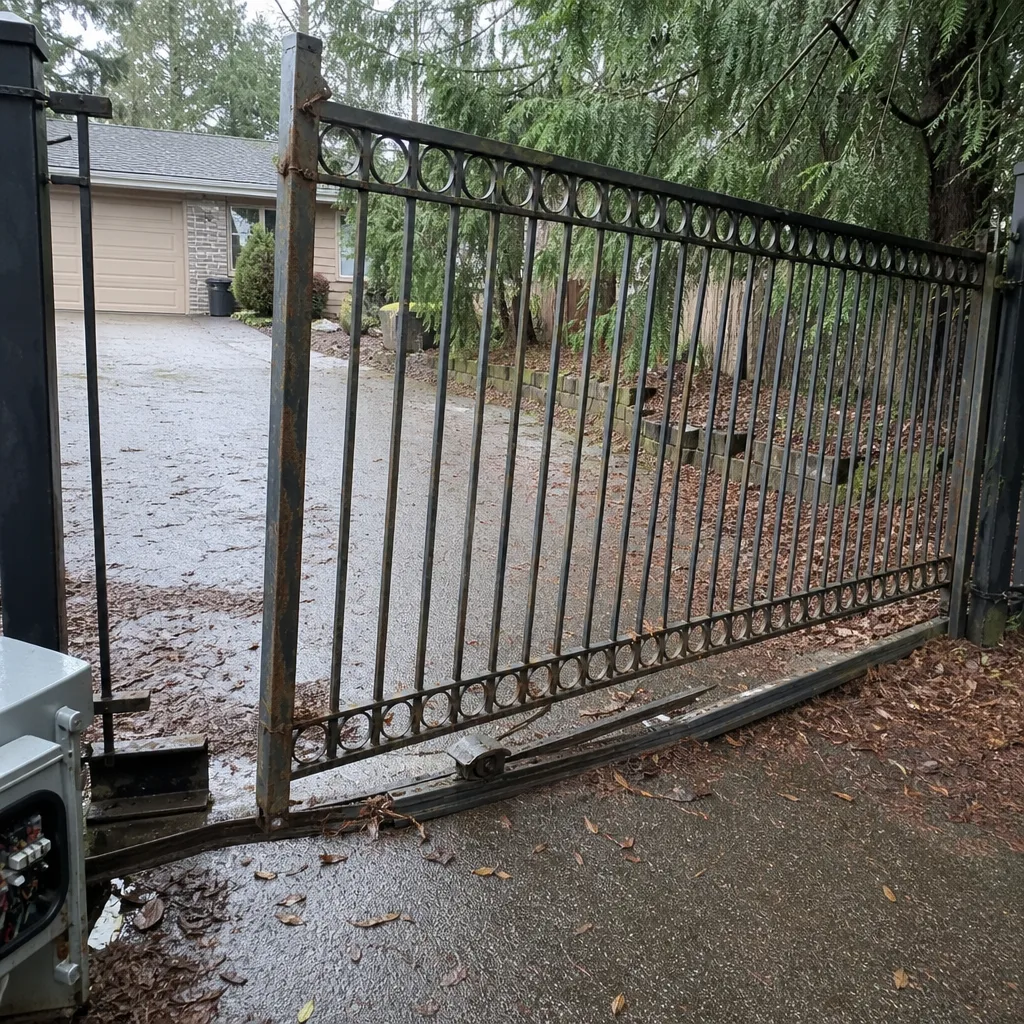 Before
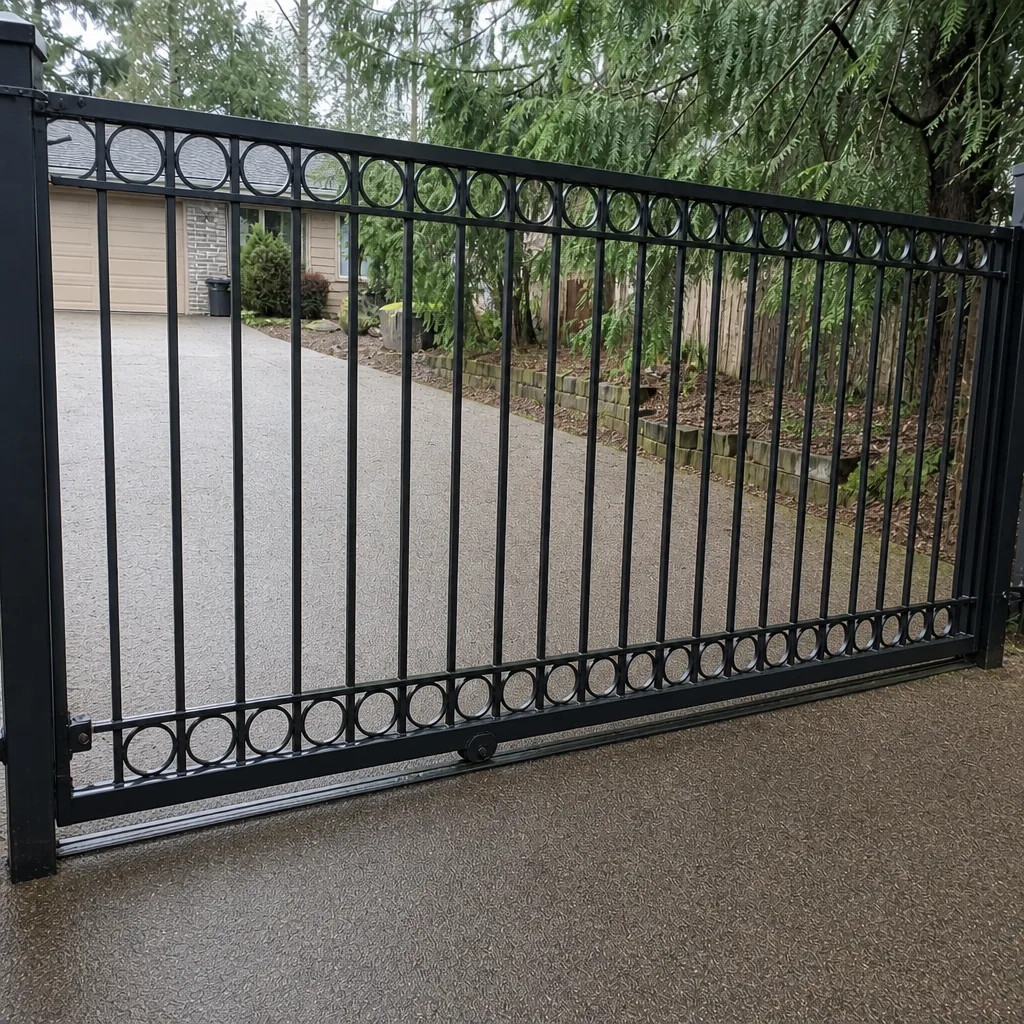 After
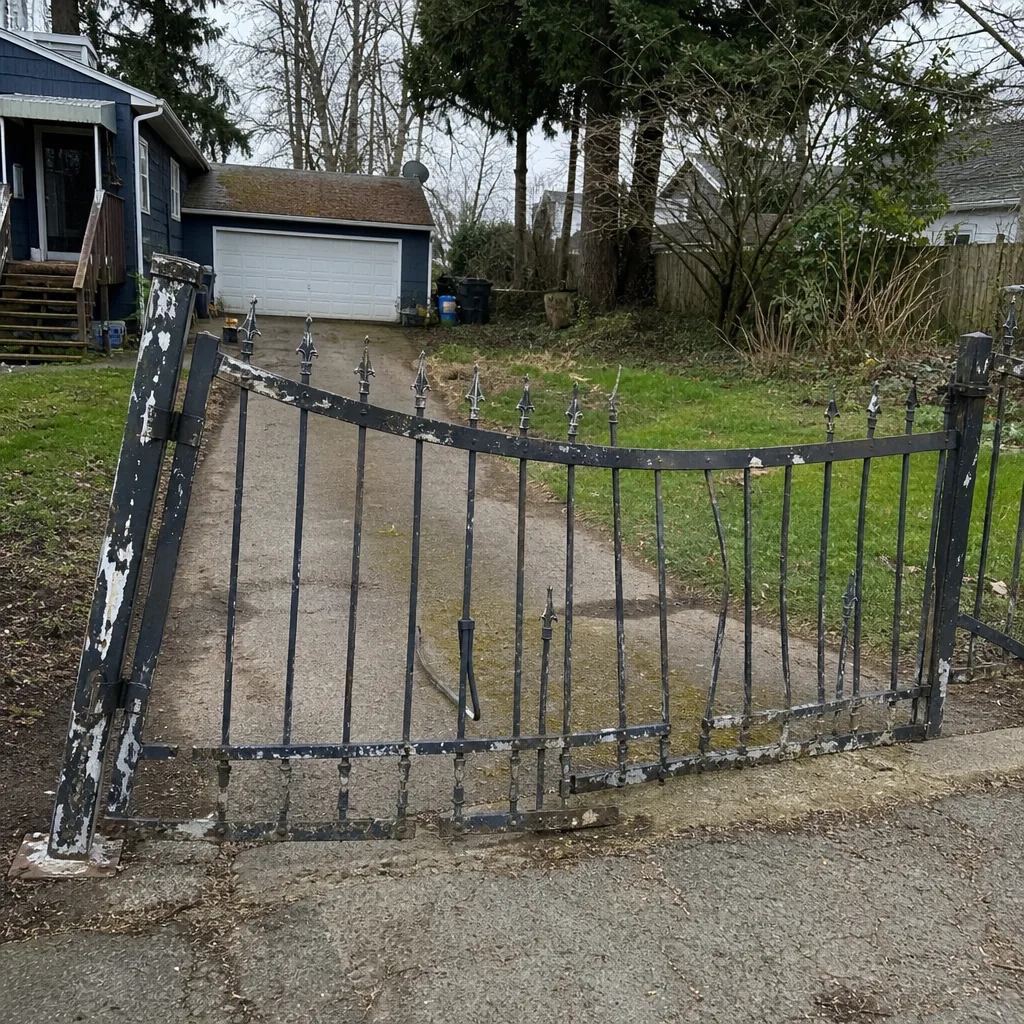 Before
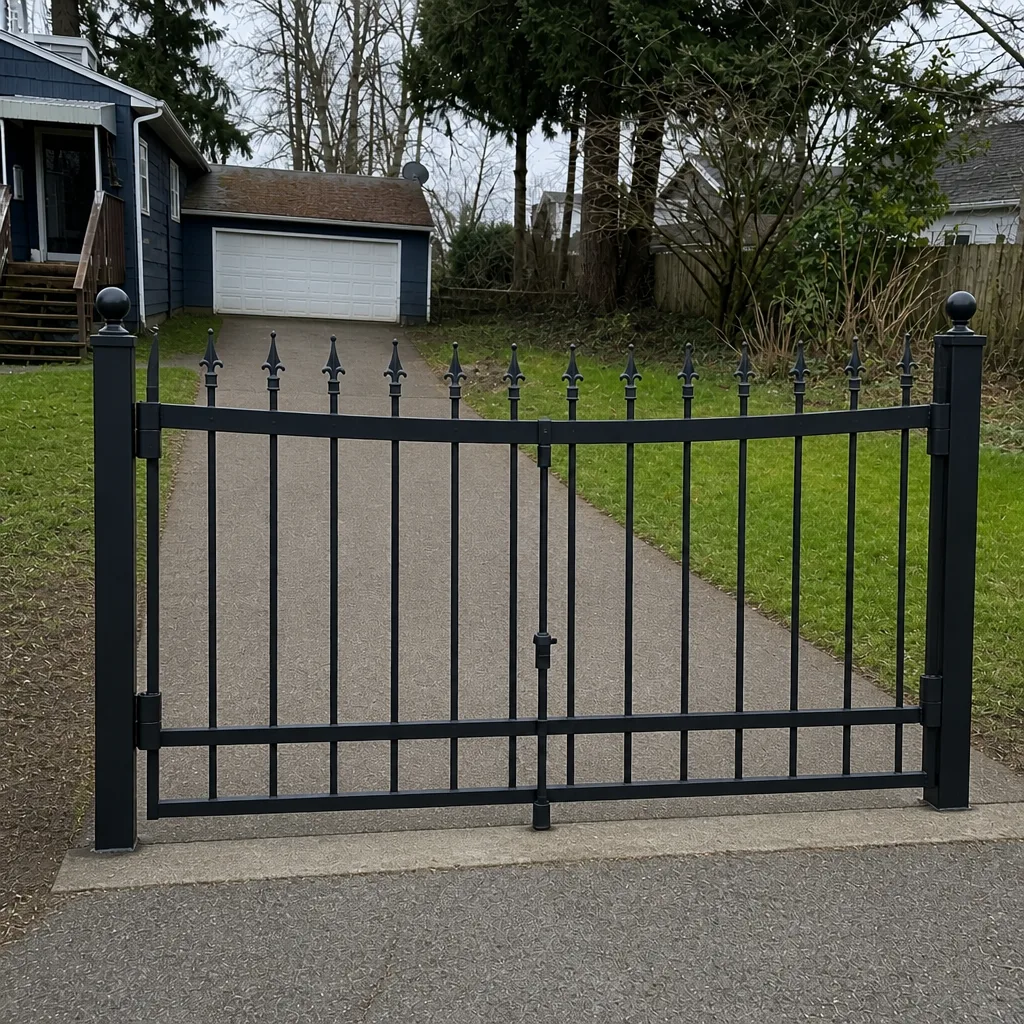 After
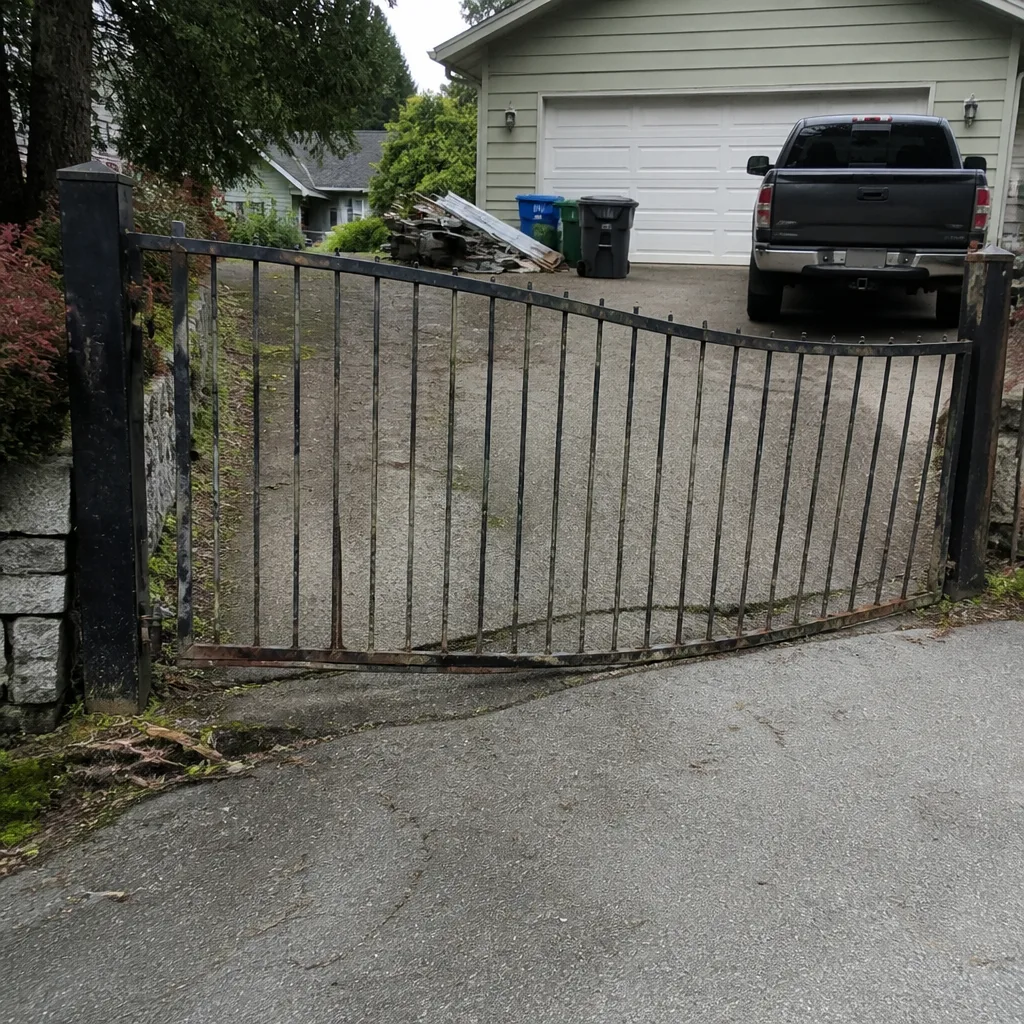 Before
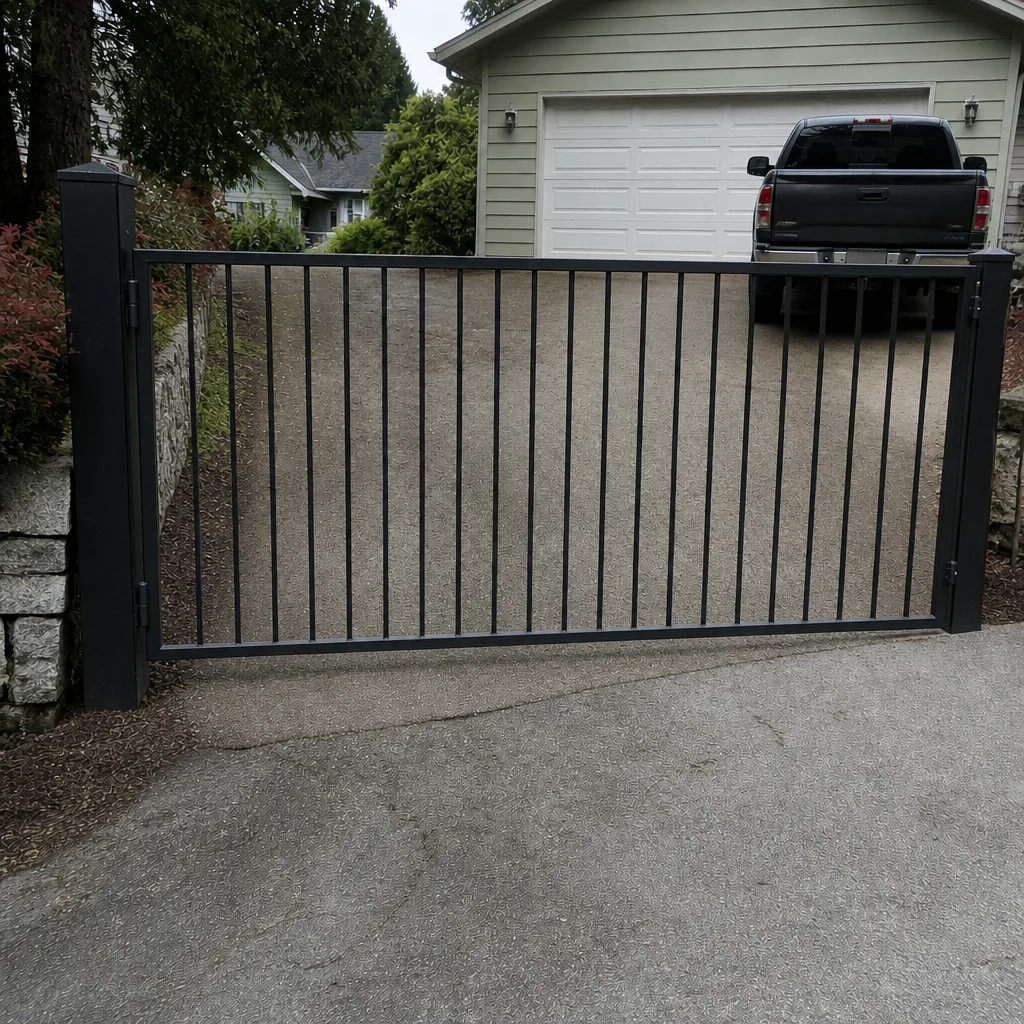 After
When to Call a Professional
Some maintenance is DIY-appropriate: monthly visual checks, clearing the gate path, keeping the log. Other work belongs to a technician. Call us if the gate stops mid-cycle, if the safety reversal fails, if you see corrosion on the control board, if the operator is loose on its mount, if the concrete footing is cracked or shifting, or if the battery load test shows a clear decline and replacement is due. We also recommend a professional for anything inside the control box; the terminals and boards are the one part of this system where a small mistake causes an expensive failure. Gate Repair Renton offers free estimates in Renton. Call (866) 293-5161. We answer 24/7, with fast dispatch from 7am to 7pm, Sunday through Friday.
Frequently Asked Questions
A gate in Renton should get a monthly visual check, a 90-day electrical and lubrication inspection, a September pre-rainy-season pass, a November freeze prep, and a March post-winter mechanical inspection. The 90-day cadence is the most important one. Renton’s wet winters and freeze-thaw shoulder seasons accelerate wear on chains, terminals, and photo-eyes, so a single annual visit misses the failures that matter most. Call (866) 293-5161 for an exact quote on a maintenance visit – estimates are free.
A chain-specific penetrating or dry-film lubricant is the right choice for a chain drive, applied every 90 days and more frequently during the rainy season. Motor oil and grease both attract and hold grit, which turns the lubricant into an abrasive paste and wears the chain faster than running it dry. Use the product the manufacturer specifies, and wipe the chain clean before applying. If you’re not sure what your operator needs, call (866) 293-5161 – we can tell you what your specific brand takes.
Voltage measures the battery’s charge, not its ability to deliver current. A battery can read a healthy 12.6 volts on a meter and still fail to move the gate under the actual load of an open or close cycle, especially in cold weather. The only real test is to disconnect AC power and run a full cycle on battery alone, watching the voltage under load. If the reading drops below roughly 11.5 volts, the battery is on its way out. Call (866) 293-5161 for a free estimate on a replacement battery and a load test.
A flickering or dim indicator light on the receiving eye is the first sign of misalignment, but the light can stay green even when the beam is off true. Check alignment with a straightedge every 90 days, and re-verify after any freeze-thaw period. Photo-eyes drift gradually as the mounting brackets expand and contract, so an annual check doesn’t catch it. Call (866) 293-5161 for a free estimate if you suspect a photo-eye issue – we can verify the alignment and the safety inputs in one visit.
Yes. Renton’s freeze-thaw cycles loosen fasteners, stiffen chains, and reduce battery capacity, so November needs a dedicated freeze-prep pass and March needs a post-winter inspection. Check every fastener, clear the track, re-test the battery, and inspect the concrete footing. If you find anything structural – a shifting footing, a cracked bracket, or a control box that’s taking on water – stop and call a professional. Call (866) 293-5161 for a free estimate.
Record the date, the cycle count (if your operator tracks it), the open and close time for a full cycle, the battery voltage under load, the photo-eye indicator state, any torque notes on key fasteners, and any changes in sound or behavior in plain language. The cycle count and cycle time are the two most useful metrics, because they reveal wear before it becomes a failure. Two or three months of data will show you patterns you can’t see in a single visit. Call (866) 293-5161 for a free estimate if the log turns up something that needs a technician.
The Bottom Line
Gate maintenance in Renton isn’t one checklist; it’s three layered schedules running at once. Monthly checks catch the obvious problems. The 90-day inspection catches the slow ones – photo-eye drift, terminal corrosion, battery decline – that turn into expensive failures if you leave them a year. September, November, and March are the seasonal anchors: get the electrical system ready before the rain, prep for freeze-thaw, and inspect the mechanical system after winter. Keep a log with real numbers, use the right lubricant for your drive type, and load-test the battery every quarter. Our technicians have up to 8 years of experience across LiftMaster, FAAC, BFT, Linear, Viking, Ghost Controls, DoorKing, Elite, and Mighty Mule systems. When something needs a professional, we already know the brand.
If your gate needs attention, or you’d like a technician to look it over and confirm what’s due, Gate Repair Renton specializes in gates – repair, electric systems, and installation – and we can diagnose it fast and give you a free estimate. Call (866) 293-5161. We answer 24/7. Fast dispatch from 7am to 7pm, Sunday through Friday.
Written by the team at Gate Repair Renton.