
Last updated November 15, 2026
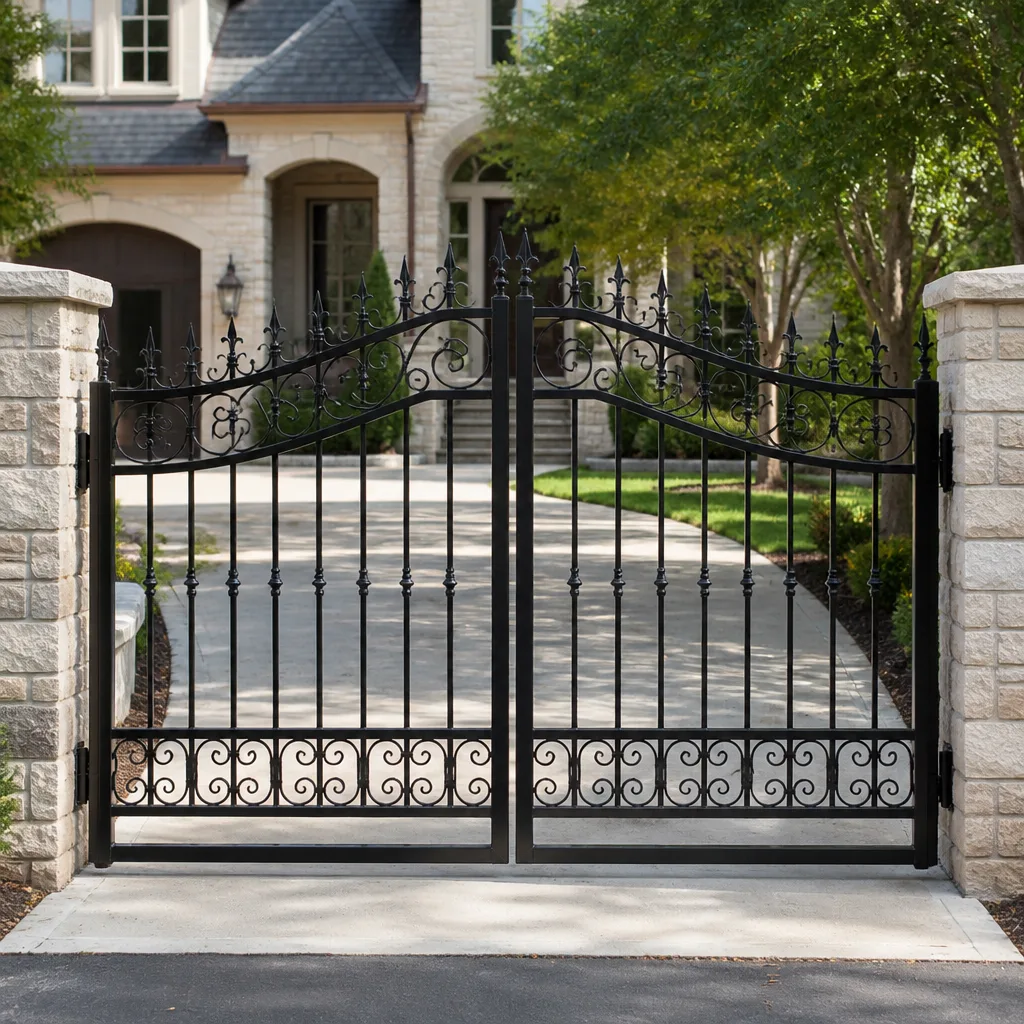 Wrought iron
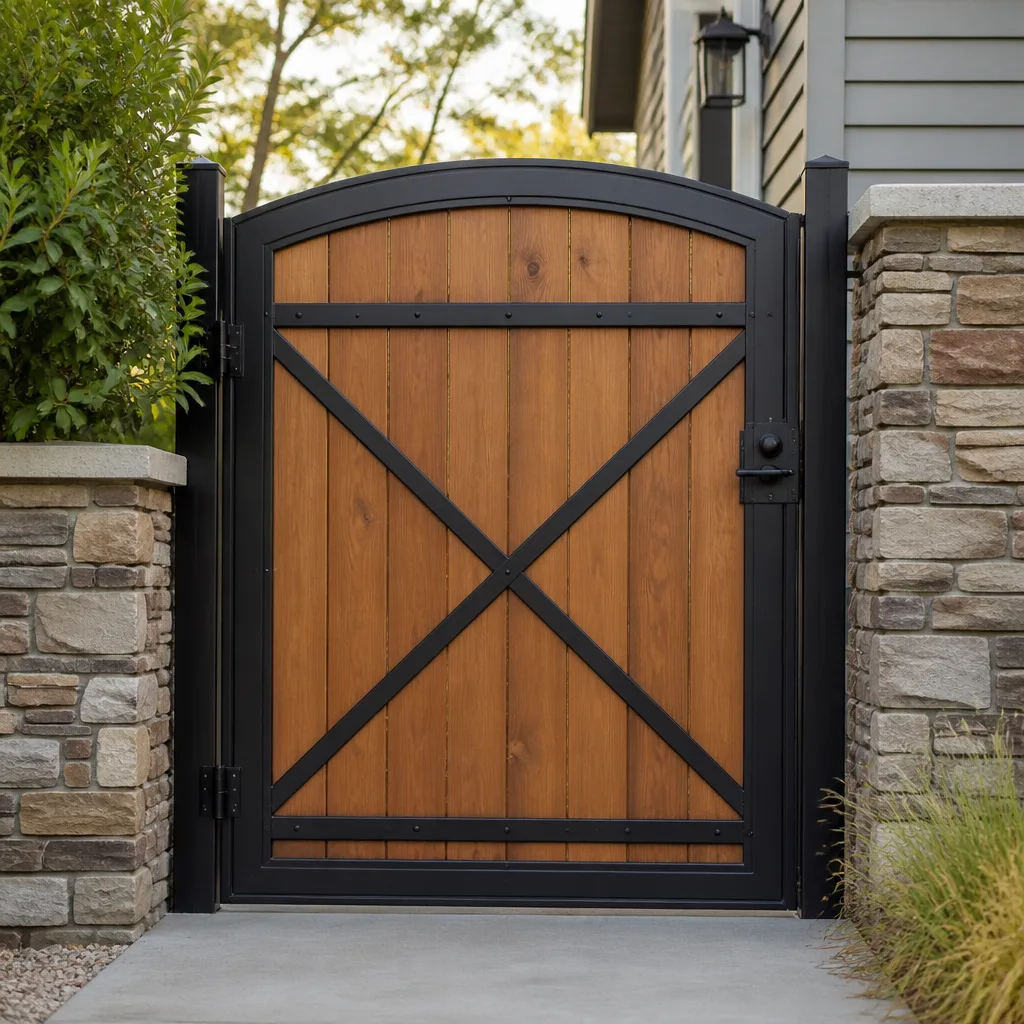 Wood & steel frame
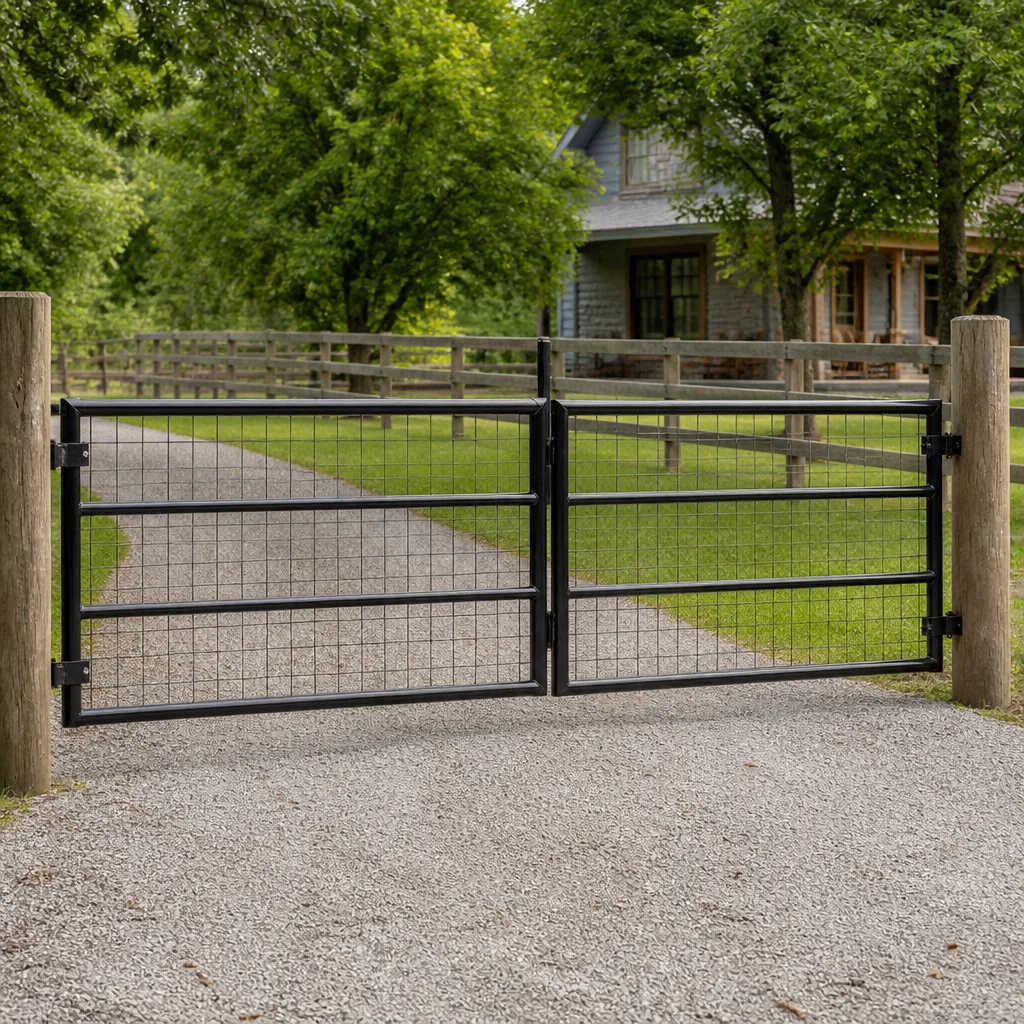 Farm & ranch
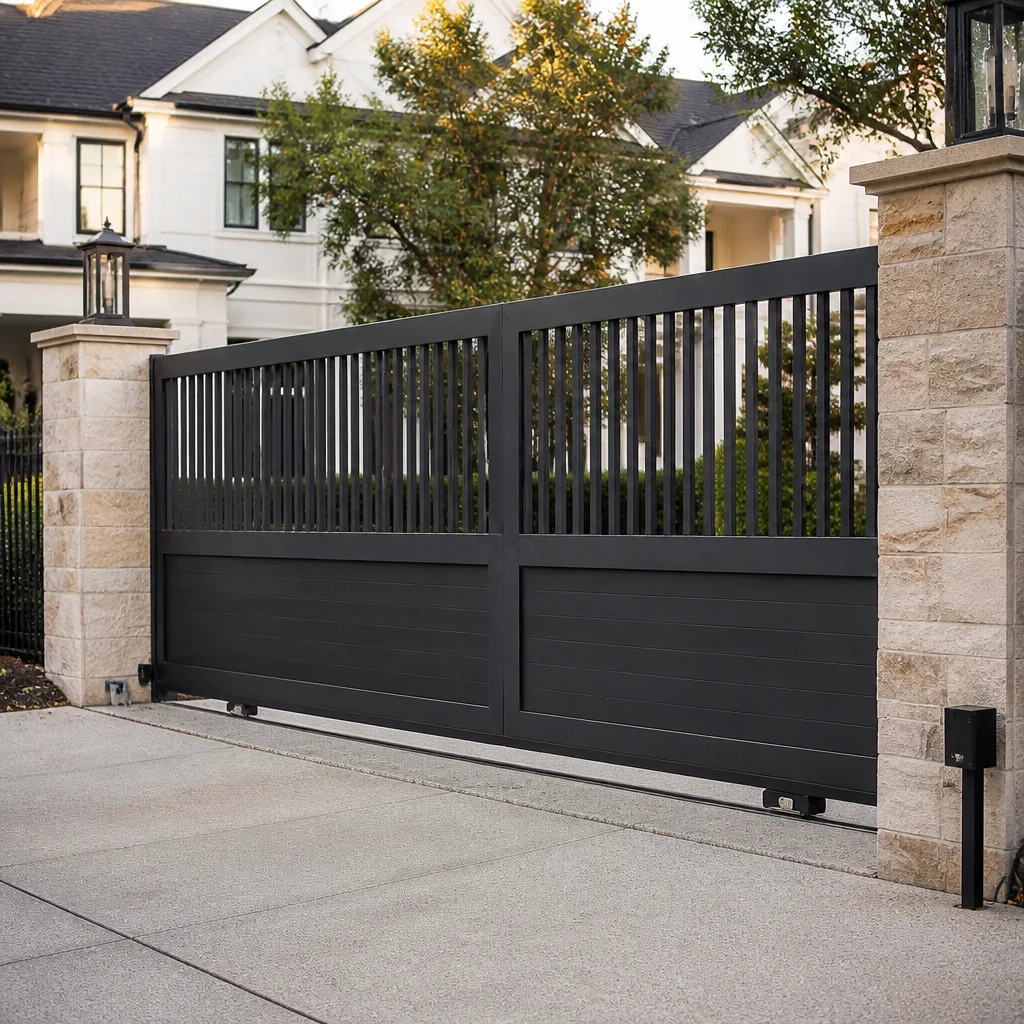 Sliding driveway gates
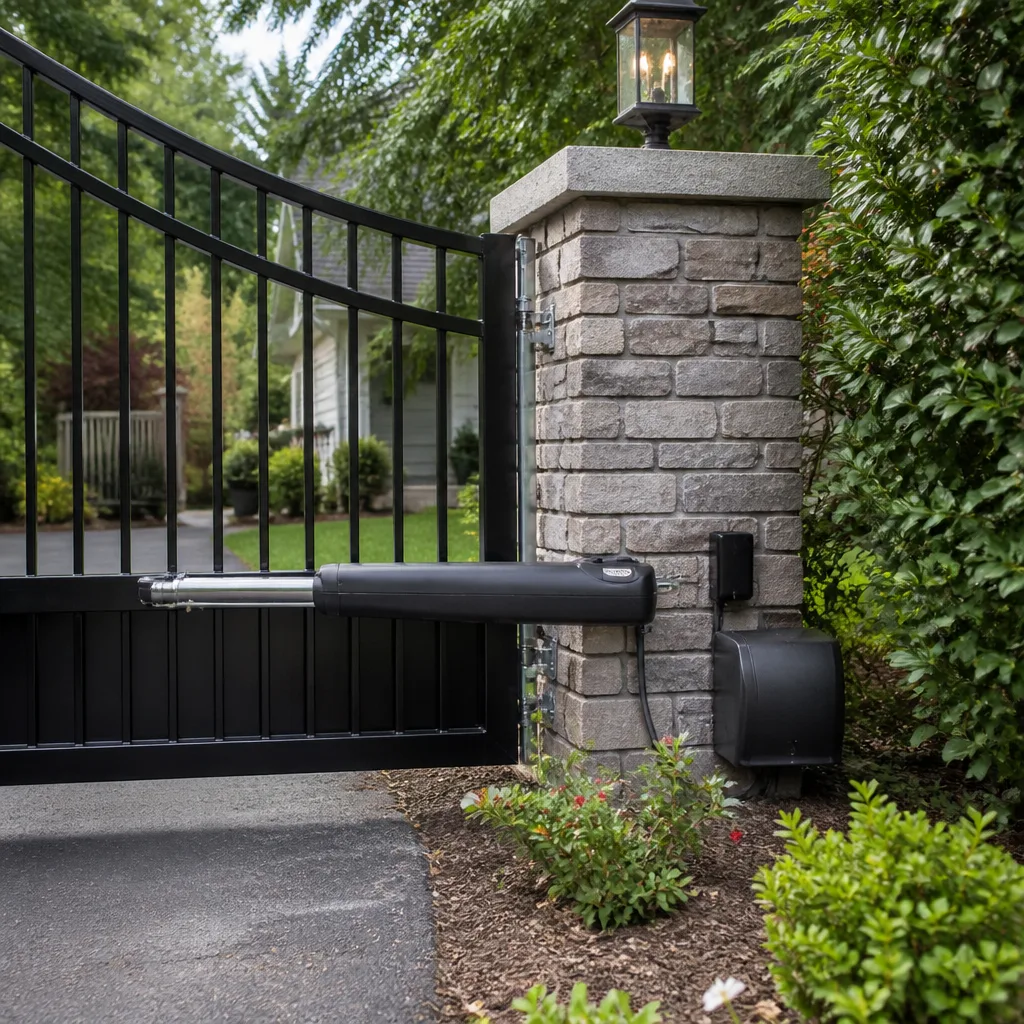 LiftMaster operators
Free on-site gate assessment - hinges, posts, and your LiftMaster or Nice gate operator checked before anything is quoted
The assessment is free and the quote is the invoice.
Get your free estimateSeasonal Gate Repair Care for Renton: Year-Round Homeowner’s Guide
Most gate care advice you’ll find online follows a four-season template that was written for somewhere else. Winterize, spring clean, summer check, fall prep. That rhythm doesn’t match what actually happens to a gate operator in Renton. Here, the failure cycle is sharper and stranger: a freeze-thaw sequence from January through March that works limit switches loose, then a summer heat load that makes control boards throttle or drop out entirely. Neither problem looks like weather damage when it shows up. In this guide we’ll map the tasks to Renton’s real weather calendar, explain what each component is actually reacting to, and give you a month-by-month plan you can run on your own gate.
Quick Answer
Gate operators in Renton fail most often in the two-week window after a seasonal transition, not in the heart of the season itself. The freeze-thaw cycles of late winter stress limit switches and ground-mounted housings, while summer heat causes control boards and motor windings to throttle or shut down. Seasonal care that’s timed to Renton’s actual climate, rather than a generic four-season checklist, prevents most of these failures.
Styles & brands we work with
- Wrought iron
- Wood & steel frame
- Farm & ranch
- Sliding driveway gates
- LiftMaster operators
Table of Contents
- Why Gate Failures in Renton Don’t Follow a Four-Season Pattern
- The Late-Winter Freeze-Thaw Window: January Through March
- Standing Water and Ground-Mounted Housings: November Through April
- Summer Heat Load: Thermal Shutdown vs. Electrical Fault
- Wood Gates and Ornamental Iron Gates Need Different Seasonal Prep
- The Month-by-Month Gate Care Calendar for Renton
- Drainage and Footing Adjustments That Prevent Repeat Failures
- What Operator Brand Tells You About Seasonal Behavior
Why Gate Failures in Renton Don’t Follow a Four-Season Pattern
A gate operator in Renton lives through two distinct stress seasons, and neither one lines up with the four-season framework you see in most maintenance guides. Renton’s wet season runs long, roughly November through April, with a lot of light rain and a handful of colder stretches that dip below freezing. The dry stretch from June through September brings real heat and long days of direct sun. Between those two extremes you get short transition windows, and that’s where the trouble concentrates.
Here’s the counterintuitive part. The failure rarely happens on the coldest night or the hottest afternoon. It happens days or weeks afterward, when the stress that built up during the extreme finally shows up as a symptom. A limit switch that got nudged by frost heave won’t announce itself in February. It’ll show up in March as a gate that stops an inch short of closing. A control board that throttled through an August heat wave will start throwing phantom faults in September once the evening temperatures drop.
Gate Repair Renton sees this pattern play out across the city every year, from the older neighborhoods near downtown to the newer developments off the valley floor. The fix is to time your own maintenance tasks to the calendar that Renton actually has, not the one printed on a generic checklist:
- Stress window one: the January-through-March freeze-thaw sequence, which affects limit switches, ground-mounted housings, and post footings.
- Stress window two: the July-through-September heat load, which affects motor windings, control boards, and battery backup units.
- Transition windows: the two to three weeks after each stress window, when latent failures surface as visible symptoms.
- The quiet months: typically October and April, when an inspection catches the most for the least effort.
If you’re in Renton and you’ve got an automated gate, our Gate Repair Renton team is built around exactly this climate and this operator population. We specialize in gates, and only gates. The timing logic below is what we work from.
The Late-Winter Freeze-Thaw Window: January Through March
The freeze-thaw cycle is the single biggest source of springtime gate failures in Renton. When water gets into a joint, a post base, or a housing seal and then freezes, it expands. When it thaws, it contracts. Do that twenty times over a couple of months and things that were tight and aligned start to drift. The gate still works, mostly. But it’s not quite right, and the small drift compounds.
The components that absorb the most damage during this window are:
- Limit switches: the small components that tell the operator where the gate is open and closed. Frost heave can shift a post or an arm just enough to throw them out of alignment, and the gate starts stopping in the wrong place.
- Ground-mounted operator housings: any operator that sits at ground level is taking on water from the saturated soil. When that water freezes inside the housing, the seals degrade faster than they otherwise would.
- Gate hinges and pivot points: lubrication gets pushed out by temperature cycling. Metal-on-metal starts to grind, and the operator has to work harder than it should.
- Post footings: even a well-set post can shift slightly when the ground works through repeated freezing and thawing. A post that moves a fraction of an inch can throw a swing gate’s geometry off enough to bind.
What to do during the January-through-March window, in order:
- Clear all debris from the gate’s travel path after any storm. Wet leaves and branches compact into the track and force the operator to work against resistance.
- Check that the gate opens and closes fully in both directions, and listen for any change in the sound the operator makes. A new grind or whine is a signal.
- Look at the ground around any ground-mounted operator. If water is pooling within a few feet of the housing, that’s the drainage problem in the next section.
- Have the limit switches and travel checked before spring. This is a job for a technician with the right tools, not a homeowner with a screwdriver.
- Keep the hinges and pivot points lubricated with a product rated for cold weather. Grease that thickens in the cold will slow the gate and stress the motor.
When a gate starts misbehaving in late winter, the instinct is to blame the operator. Most of the time the gate repair that’s actually needed is mechanical: an alignment issue, a hinge, a shifted post. Our technicians have up to 8 years of experience reading that difference.
Standing Water and Ground-Mounted Housings: November Through April
Renton’s wet season is long and steady. From November through April, the ground around a gate rarely dries out completely, and any low spot in the grade collects water. For a ground-mounted operator, or a slide gate operator sitting on a concrete pad, that persistent moisture is the start of a slow failure. Water doesn’t need to flood the housing to cause damage. It just needs to sit against the seal and let humidity build up inside.
What actually happens inside a housing that’s taken on water:
- The internal components corrode faster than they would in dry conditions. Control boards and terminal blocks are the first to show it.
- Standing water freezes in cold stretches and expands, prying at gaskets and seals. A seal that fails in February lets in more water, which makes the next freeze worse.
- Insects and debris find their way into the housing through the same gaps. A nest built over a terminal block will cause intermittent faults that are hard to trace.
- The operator’s internal sensors start reading wrong. A loop detector or a safety edge that’s been sitting in damp conditions may report the gate as obstructed when nothing is there.
The drainage modifications that prevent this are straightforward and usually don’t require a major rebuild:
- Re-grade the immediate area. A small swale or a slight rise around the operator housing moves water away from the seals instead of toward them.
- Add a French drain or a gravel bed. A shallow trench filled with gravel lets water move down and away rather than pooling on the surface.
- Raise the housing on a concrete pad. If the operator sits directly on soil, a modest pad lifts it above the saturation line and gives water somewhere to go that isn’t the housing.
- Reseal the housing once a year. A fresh gasket or a bead of weather-rated sealant on the lid is cheap insurance against the whole cycle repeating.
When the water has already done damage to a control board or a motor, that’s electric gate repair, and it’s what we do. We diagnose the electrical fault and the drainage problem together, because fixing one without the other just means the same failure returns next wet season.
Summer Heat Load: Thermal Shutdown vs. Electrical Fault
August is the other failure month in Renton, and it catches homeowners off guard because it doesn’t look like weather damage. A gate operator that runs fine in June starts shutting down mid-cycle in August. The gate works in the morning, quits in the afternoon, then starts working again the next morning. That pattern is almost always thermal, not electrical, and the two get misdiagnosed constantly.
Here’s how to tell them apart:
- Thermal shutdown: the gate fails during the hottest part of the day and recovers on its own once things cool down. The operator may feel hot to the touch. The failure is consistent with temperature, not with any particular command or motion.
- Electrical fault: the gate fails at random times and doesn’t recover predictably. It may throw a specific fault code, make an unusual noise, or fail only in one direction. A multimeter will usually find the problem.
The thermal problem is coming from three places. First, motor windings: a motor pushed to work harder than it should, because of a binding hinge or a slightly misaligned gate, generates more heat than it’s designed to shed. Second, the control board: modern operators have thermal protection that throttles performance or shuts down entirely when the board gets too hot. Third, the sun itself: a dark metal housing in direct August sun can hit temperatures well above the ambient air, which amplifies both problems.
What helps during July through September:
- Clear any obstruction in the gate’s path. A gate that’s dragging slightly is putting extra resistance on the motor and generating extra heat.
- Check the hinges and the track for binding. Anything that makes the motor work harder will make it run hotter.
- Provide shade if the housing sits in full afternoon sun. A simple shade structure, or relocating the housing to the shaded side of the gate if that’s practical, can make a real difference.
- Inspect the battery backup if the operator has one. Heat degrades battery capacity faster than cold. A backup battery that’s a couple of years old may not hold a charge through a hot summer.
- Run the gate during the cooler part of the day if you can. Fewer cycles in the afternoon heat means less thermal stress on the board and the windings.
An operator that shuts down repeatedly in August, even if it recovers, is telling you something. Ignoring it until it fails outright in a way that needs full replacement is the expensive path. A quick diagnostic in July is the cheap one.
Wood Gates and Ornamental Iron Gates Need Different Seasonal Prep
Most seasonal gate advice treats all gates as the same object. They aren’t. A wood gate and an ornamental iron gate absorb Renton’s climate in completely different ways, and applying the wrong protocol to either one will shorten its life. The operator might be identical, but the gate panel it’s driving needs different care.
Wood gates in Renton’s long wet season are in a near-constant state of absorbing and releasing moisture. That movement is what causes the problems: boards swell in the wet months and shrink in the dry ones, which is why a wood gate that closes perfectly in November can bind in July. The right protocol:
- Apply a penetrating water repellent in early fall, before the wet season starts. A film-forming finish that traps moisture inside the wood is worse than nothing once the rain starts.
- Check the joints and the hardware every spring. Fasteners work loose as the wood moves, and a gate that’s coming apart at the joinery puts stress on the operator.
- Look for any rot at the bottom rail or post base in the wet months. Water sits at the low point, and that’s where wood fails first.
- Don’t seal a wood gate in the middle of the wet season. Trapping surface moisture under a new coat is the fastest way to accelerate rot.
Ornamental iron gates are more dimensionally stable, but they have their own seasonal profile. The failure mode is corrosion at the joints, welds, and any point where the finish has been scratched. The right protocol:
- Inspect for scratches and touch them up promptly. A small chip in the paint in November will be a rust spot by March.
- Check the weld points at the hinges and the latch every spring. Cycle after cycle of freeze-thaw puts stress on those joints, and a hairline crack can propagate.
- Lubricate the hinges on the cold-weather schedule. Iron-on-iron hinges with dried-out grease are the most common cause of a stiff swing gate in Renton.
- Don’t power-wash a painted iron gate in the wet season. The water gets into the joints and stays there.
Applying a wood-gate protocol to an iron gate, or the reverse, isn’t just wasted effort. The wood protocol leaves the iron gate under-protected against scratches, and the iron protocol traps moisture on the wood. Different panel, different plan.
The Month-by-Month Gate Care Calendar for Renton
Here’s the calendar we work from, timed to Renton’s actual climate rather than a generic four-season schedule. It isn’t a strict rulebook; if a cold snap or a heat wave arrives early, shift the relevant tasks forward. But the logic holds: you’re always working one step ahead of the stress, not reacting after it.
January – Check the gate’s travel and listen for any change in the operator’s sound after the first cold stretch. Clear debris from the track after storms. Verify the operator’s housing hasn’t taken on water from snowmelt or rain.
February – The peak freeze-thaw month. Inspect hinges and pivot points for anything that feels loose or sluggish. Look at post footings for any sign of movement. If the gate has never been checked for limit switch alignment, this is the month to book it.
March – Transition window. Latent failures surface now. Run the gate through a full cycle several times and note any hesitation, any sound, any spot where it stops short. Check the grade around any ground-mounted housing for standing water.
April – The inspection month. This is the best window for a full professional check, before summer heat arrives. Address any drainage issue you spotted in March. Clean out the operator housing and replace the seal if it’s seen better days.
May – Run the gate regularly before the heat arrives. Any binding, any reason the motor would work harder, is worth fixing now rather than in August. Check the safety edges and any loop detectors for proper function.
June – Inspect the housing’s sun exposure. If it sits in full afternoon sun, consider shade. Check the battery backup unit; if it’s been in service a few years, its capacity may be down.
July – Watch for the thermal pattern. A gate that fails in the afternoon and recovers overnight is telling you something. Clear the path, check the hinges, and get a diagnostic if the pattern repeats.
August – The peak heat month. Same thermal watch as July. If the gate is shutting down mid-cycle in the afternoon, don’t ignore it and hope for cooler weather.
September – Transition window after summer. Phantom faults that linger past the heat are electrical, not thermal. Book a diagnostic if the gate still misbehaves after the first cool week.
October – The second inspection month. Prep the gate panel for the wet season: water repellent on wood, touch-up paint on iron, fresh grease on the hinges. Clean the drainage channels around the housing.
November – Wet season begins. Check that no water is pooling near the operator. Make sure leaves and debris aren’t building up in the track. This is the month to fix drainage, not the month to discover it.
December – Keep the hinge lubrication fresh. Watch for the first freezing nights. Any water sitting on the gate or in the housing is now a freeze risk, not just a moisture risk.
Drainage and Footing Adjustments That Prevent Repeat Failures
The most common repeating problem we hear about from Renton homeowners is a gate that fails the same way, every year, at the same time. That pattern almost always points to a small physical issue that never got fixed: a low spot that collects water, a shifted post, a housing that’s a hair too close to the ground. The operator gets repaired, and then the same conditions cause the same failure eight months later.
Before you replace any part of an operator, look at what’s happening to it physically. The two most common repeat offenders are drainage and footing:
- The low spot. If water collects within a few feet of a ground-mounted operator or a gate post, that’s the root cause of a lot of corrosion and electrical failures. Fixing the grade with a shallow swale, a gravel bed, or a small raised pad is the fix.
- The shifted post. A post that’s moved, even slightly, throws the gate’s geometry off. On a swing gate, that means the arm is binding and the limit switches are off. On a slide gate, it means the track is out of alignment and the operator is fighting it. A post that’s drifted needs to be re-set to the proper footing depth and alignment, not just adjusted around.
- The saturated pad. A concrete pad that’s cracked or settled will hold water against the housing. Re-leveling or replacing the pad isn’t glamorous, but it’s the difference between an operator that lasts and one that needs a new control board every couple of years.
None of these are things to do yourself. They involve setting posts, moving electrical components, and getting the alignment right so the operator works as designed. They’re the kind of thing a technician handles on a site visit, and they’re worth doing once rather than living with year after year.
What Operator Brand Tells You About Seasonal Behavior
Not every operator responds to Renton’s weather the same way, and knowing which one you have is the first step in knowing what to watch for. We work with nine of the most common brands on the market, and while we won’t pretend there’s a perfect predictor of failure, some patterns are worth knowing.
Residential-grade operators, like Ghost Controls or Mighty Mule, tend to show the seasonal stress earlier than commercial systems. Their control boards are more sensitive to heat, and their battery backup units are often more affected by cold. On a Ghost Controls operator in full summer sun, the thermal shutdown pattern we described earlier is a real possibility. On a Mighty Mule, the wet-season attention to the housing seal tends to pay off quickly.
Commercial and multi-tenant operators, like DoorKing and FAAC, are built to handle more cycles, but they have their own seasonal profile. DoorKing entry systems often show water intrusion at the terminal blocks, which is a housing-seal problem. FAAC swing gate operators, in our experience, tend to be sensitive to limit-switch alignment, which is exactly the component that takes the most abuse during a freeze-thaw cycle. Linear operators, common on residential slide gates, are workhorses but need their tracks cleared of debris regularly.
None of this means a specific brand is better or worse. It means each brand has a seasonal behavior worth knowing, and a technician who already knows the brand diagnosis faster than someone who doesn’t. That’s a big part of why we specialize the way we do:
- We work with LiftMaster, FAAC, BFT, Linear, Viking, Ghost Controls, DoorKing, Elite, and Mighty Mule.
- We diagnose control boards, loop detectors, and motor assemblies rather than routing the work elsewhere.
- We work on both residential and commercial gate systems, so an HOA or a multi-tenant property gets the same one-team coverage as a single-family home.
- One team handles the diagnosis, the repair, and the installation if that’s what makes sense. No hand-off between contractors.
If you don’t know your operator brand, look for a label inside or on the housing. It’s there more often than not, and it saves everyone time on the first call.
Common Mistakes to Avoid
- Applying a four-season template to Renton’s climate. Generic maintenance schedules are timed to a hard winter and a mild summer. Renton has the opposite problem: a long wet season and a real heat load. Follow the local calendar, not a national one.
- Waiting until a gate fails outright before looking at it. The failure you notice in March was set up in January. The failure you notice in September was set up in July. A quick inspection during the transition windows catches the issue when it’s still cheap.
- Ignoring a thermal shutdown pattern. A gate that quits in the afternoon and works the next morning is telling you it’s overheating. Waiting for it to fail permanently is the more expensive choice.
- Letting water pool near the operator housing. Persistent moisture around a ground-mounted housing is a slow, steady cause of electrical failure. Fixing the grade now prevents the control board replacement later.
- Applying a wood-gate treatment to an iron gate, or the reverse. The wrong protocol can trap moisture on wood or leave an iron gate under-protected against rust. The panel material sets the plan.
- Skipping the fall prep because it rained all summer. Dry weather doesn’t make a wood gate immune to wet-season damage. The prep that matters happens before the rain, not after.
- Assuming a stuck gate is an operator problem. Most late-winter failures are mechanical: a hinge, an alignment, a shifted post. Diagnosing the operator first and the mystery second is the wrong order.
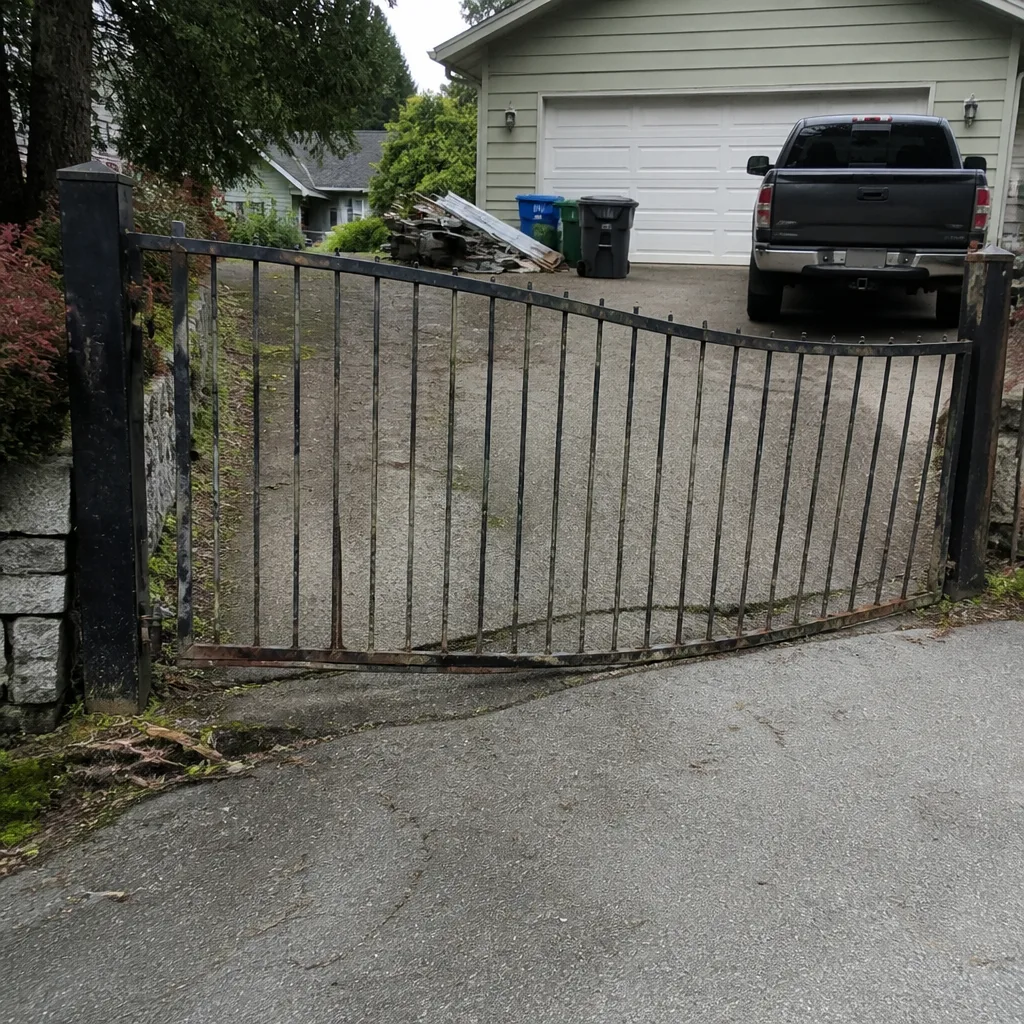
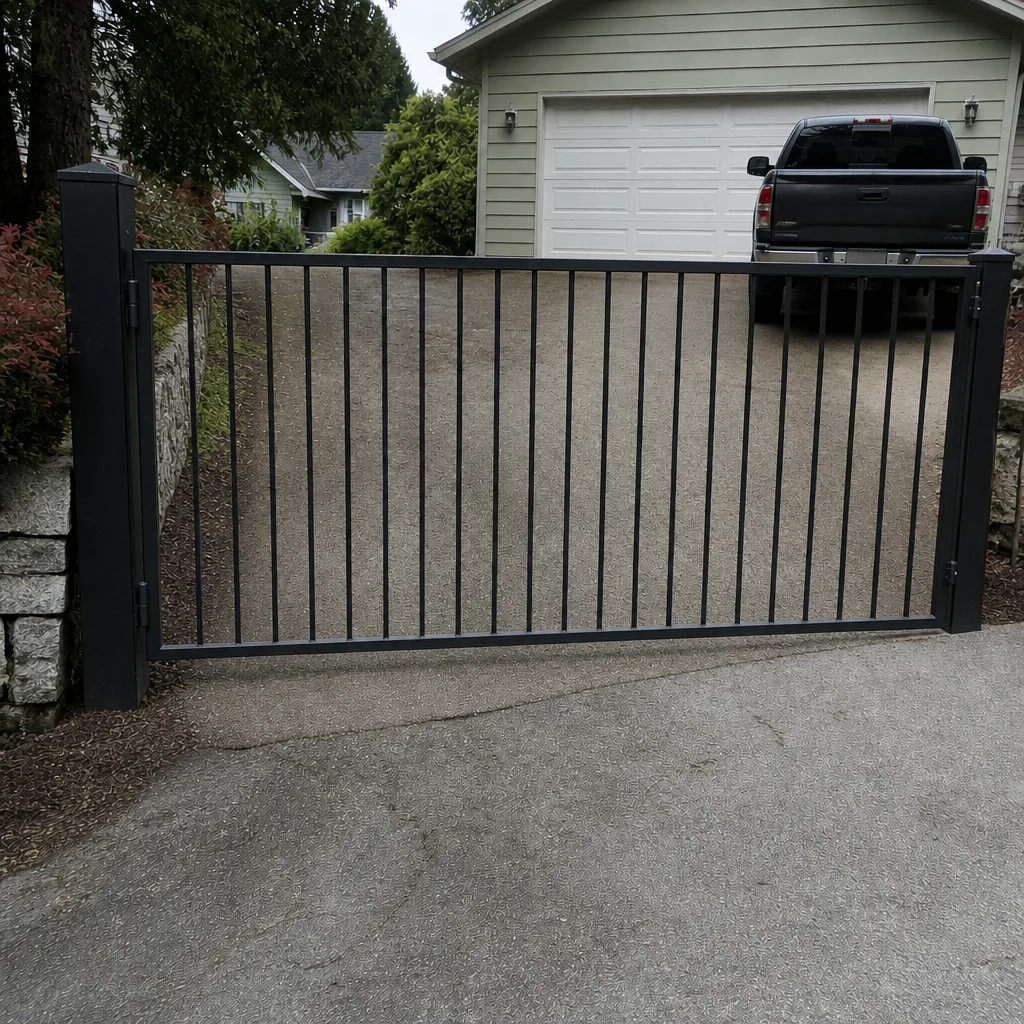
See the difference
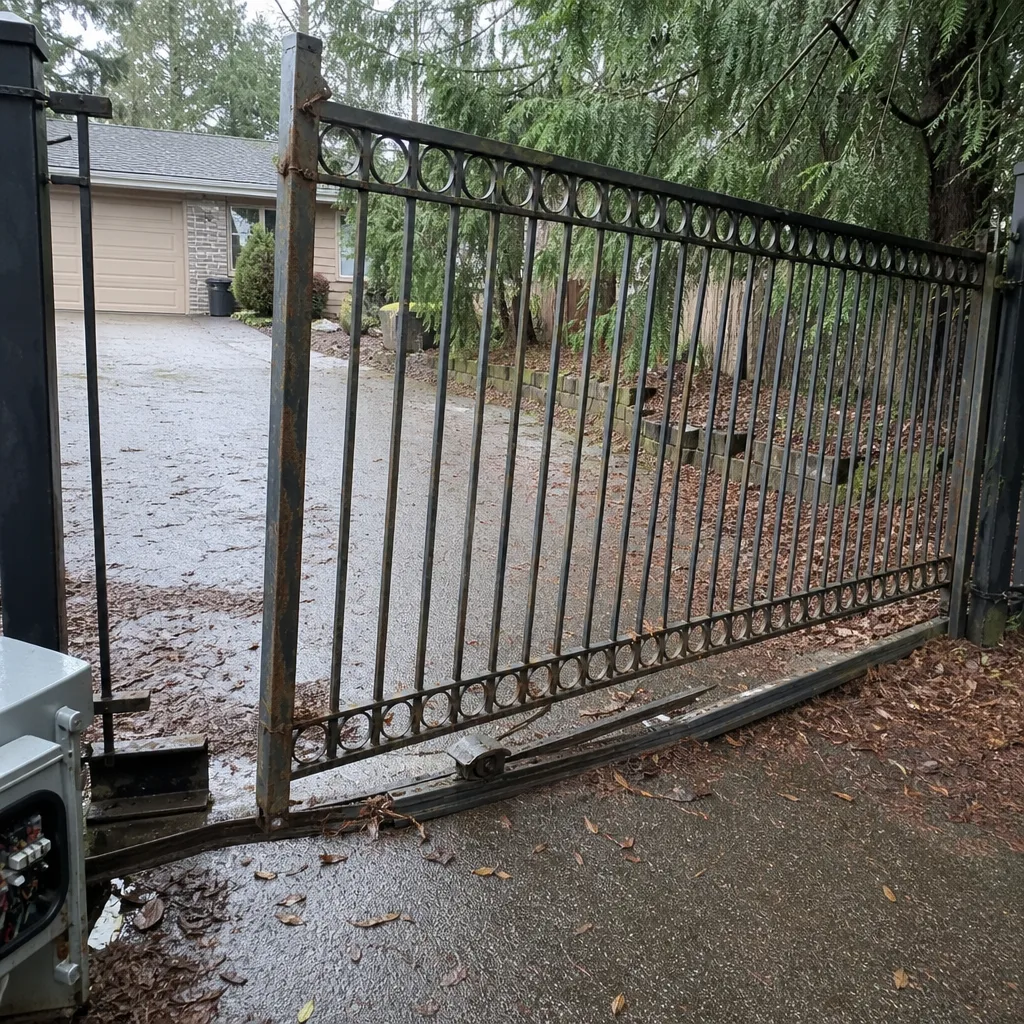 Before
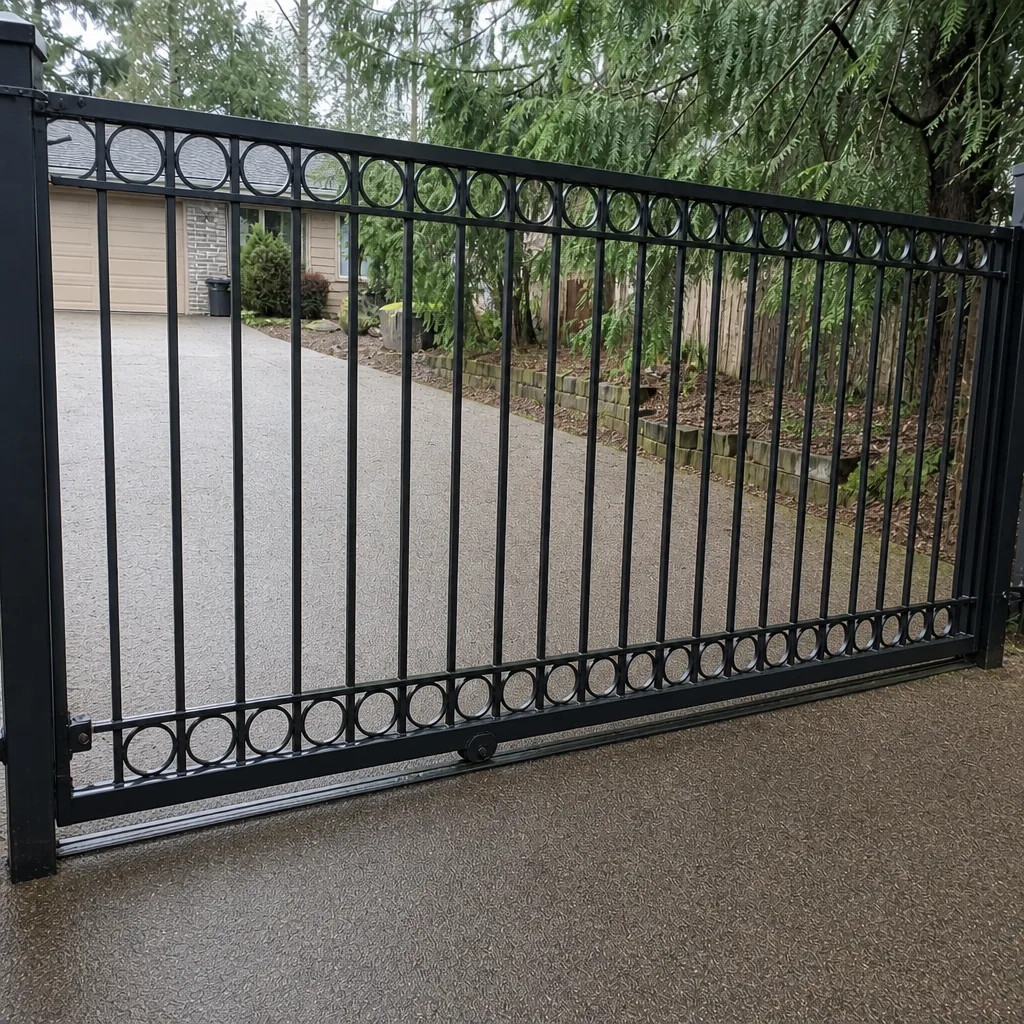 After
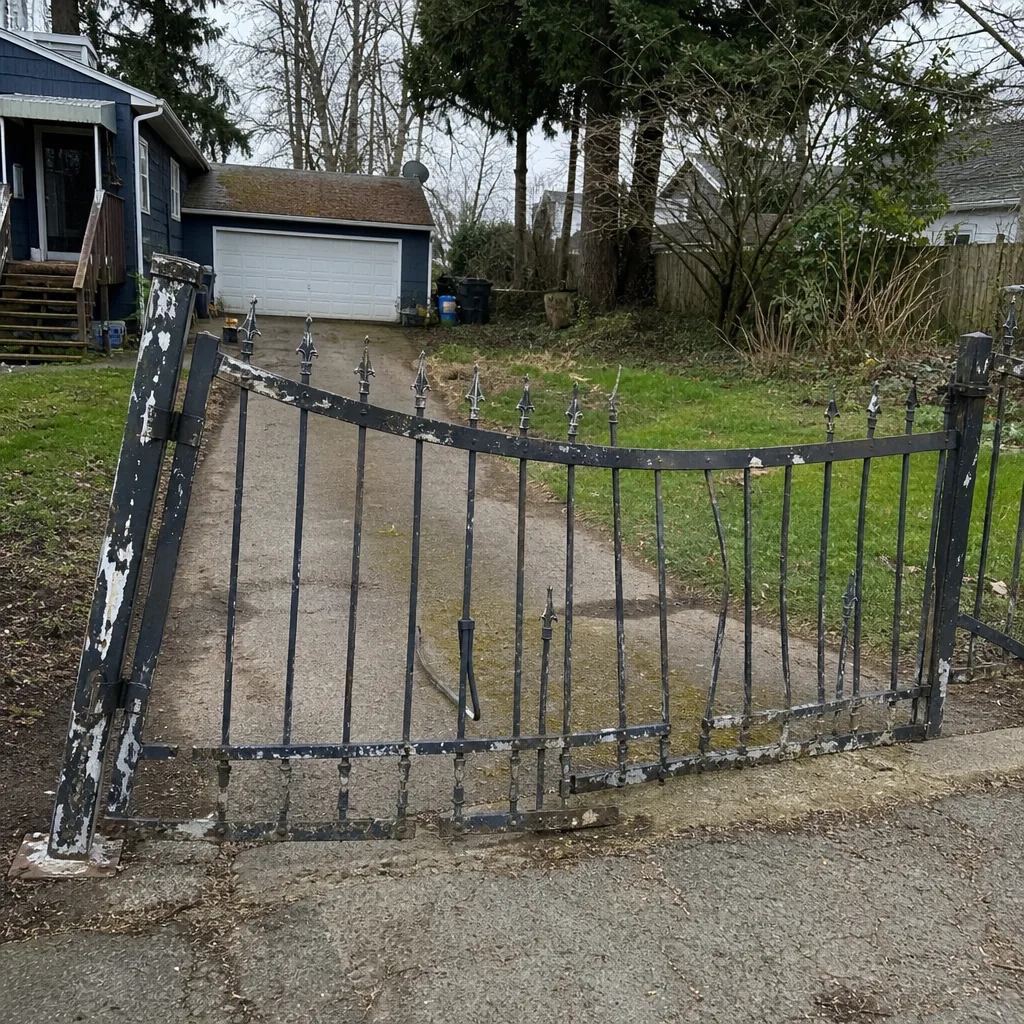 Before
 After
 Before
 After
When to Call a Professional
Some of the tasks in this guide are doable on your own: clearing debris, checking that the gate cycles fully, listening for changes in the operator’s sound. The moment the work involves opening a housing, adjusting the limit switches, working on a control board, or moving a post, that’s a technician’s job. Not because it’s complicated for the trained eye, but because the wiring and the mechanical force involved are genuinely dangerous to handle without training. A gate operator with a heavy panel and a live control board is a real hazard, and we’d rather you call than take the risk.
Call us when the gate starts misbehaving in a way you can’t trace, when the thermal pattern appears, when water is pooling around the housing, or when the panel material has a seasonal issue that needs the right protocol. Gate Repair Renton offers free estimates in Renton. Call (866) 293-5161. We answer 24/7. Fast dispatch from 7am to 7pm, Sunday through Friday. The price is quoted and agreed before any work starts, and the written estimate sets the final price.
Frequently Asked Questions
Twice a year, timed to the two transition windows. The best times are April, right before the summer heat, and October, right before the wet season. If you’re in Renton and your gate has had any past failures, a third check in the late-January freeze-thaw stretch is worth it.
That’s almost certainly a thermal shutdown, not an electrical fault. The control board or the motor is overheating during the hottest part of the day and recovering overnight. The underlying cause is usually extra resistance from a binding hinge or a slightly misaligned gate, so clearing the path and checking the hinges is the first step. Call (866) 293-5161 for an exact quote; estimates are free.
Renton’s late-winter freeze-thaw cycle is the reason. Water gets into joints and seals, freezes, expands, and thaws, and after several cycles the alignment shifts enough that limit switches go out or the gate starts to bind. A check in January and a fix in February usually prevents the March problem.
Repairs generally don’t require a permit, but a new gate installation or a change to the electrical run often does. Check with the City of Renton’s building department before any new installation. One of the pieces we’re familiar with is the Renton permit process, and we can point you toward the right department when it’s relevant.
Wood needs a penetrating water repellent applied before the wet season, and its joints need checking in the spring. Iron needs touch-up paint promptly on any scratch, and its weld points at the hinges need an annual look. Applying one protocol to the wrong material usually makes the problem worse, not better.
Sometimes, if the symptom is specific: a gate that fails only in the afternoon, a gate that stops an inch short of closing, a gate that trips the breaker. The signs in this guide are good starting points. For anything involving the control board or the wiring, a technician needs to look at it. Call (866) 293-5161. We answer 24/7. Fast dispatch from 7am to 7pm, Sunday through Friday. A call outside dispatch hours is booked into the next opening, Sunday through Friday, 7am to 7pm.
The Bottom Line
Gate equipment in Renton fails on its own schedule, and it isn’t the four-season schedule most advice assumes. The real risks are a late-winter freeze-thaw cycle that works limit switches and ground-mounted housings loose, and a summer heat load that makes control boards and motor windings throttle. The fix is timing: work one step ahead of each transition, fix the drainage and alignment issues that cause repeat failures, and match your panel material to the right seasonal plan. If the operator brand is a part of the puzzle you don’t know, that’s fine. We work with nine of the most common brands on the market, and diagnosing them is what we do. Call Gate Repair Renton at (866) 293-5161 for a free estimate. We answer 24/7, fast dispatch from 7am to 7pm, Sunday through Friday, and the price is always quoted and agreed before any work starts.
Written by the team at Gate Repair Renton.