
Last updated November 15, 2026
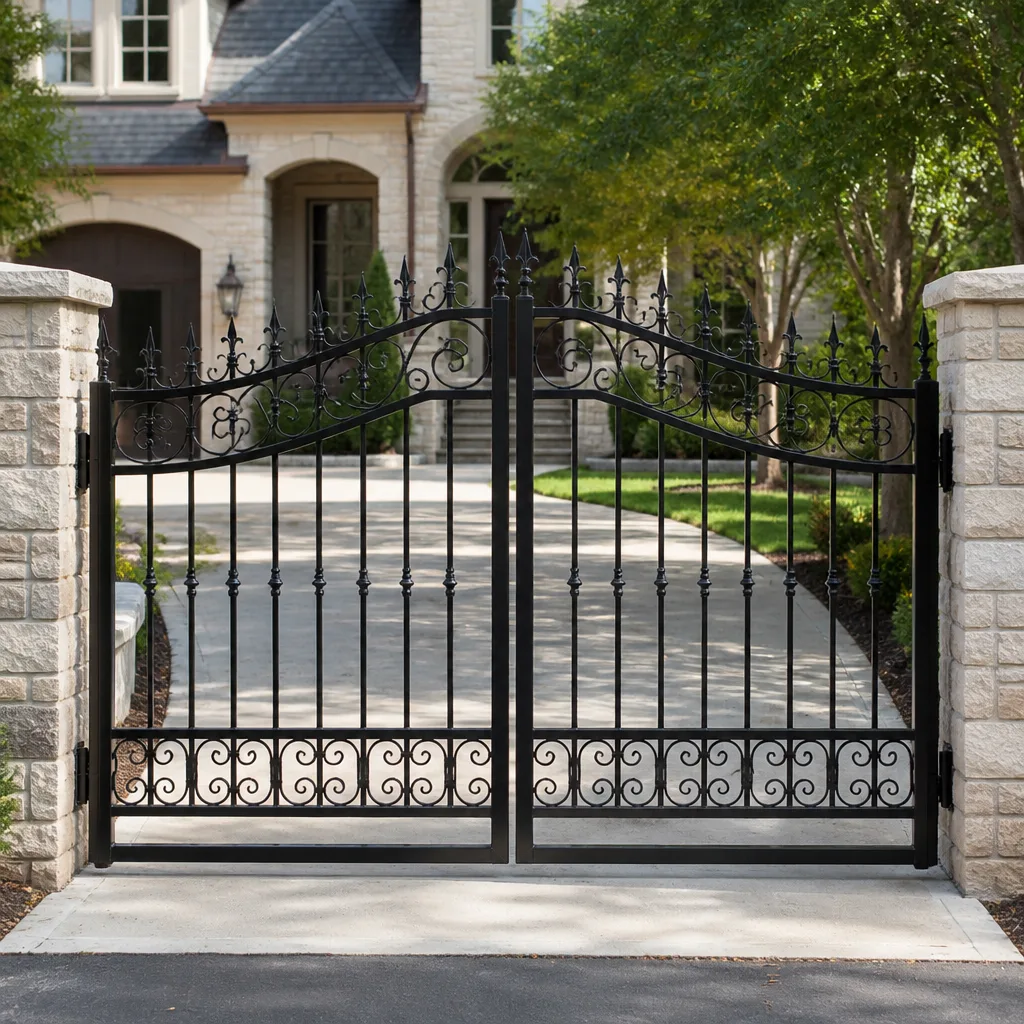 Wrought iron
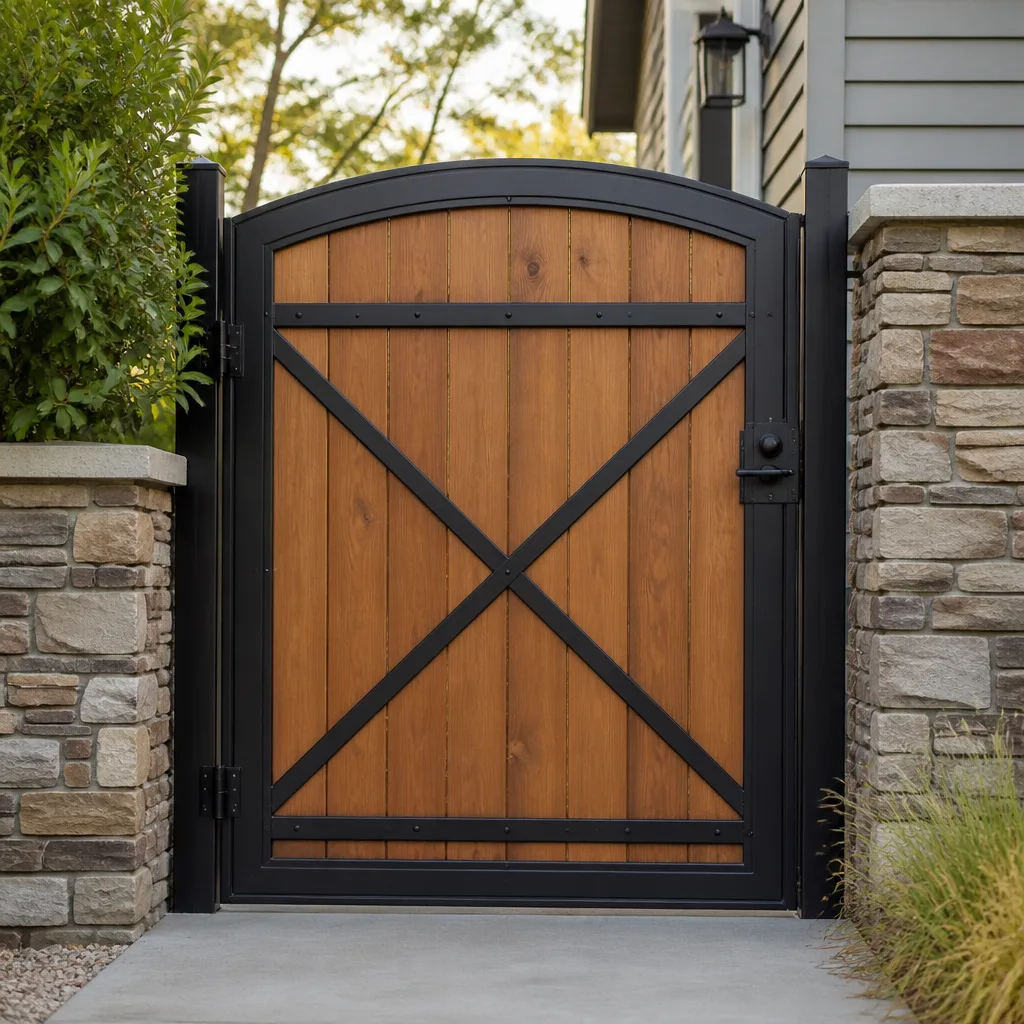 Wood & steel frame
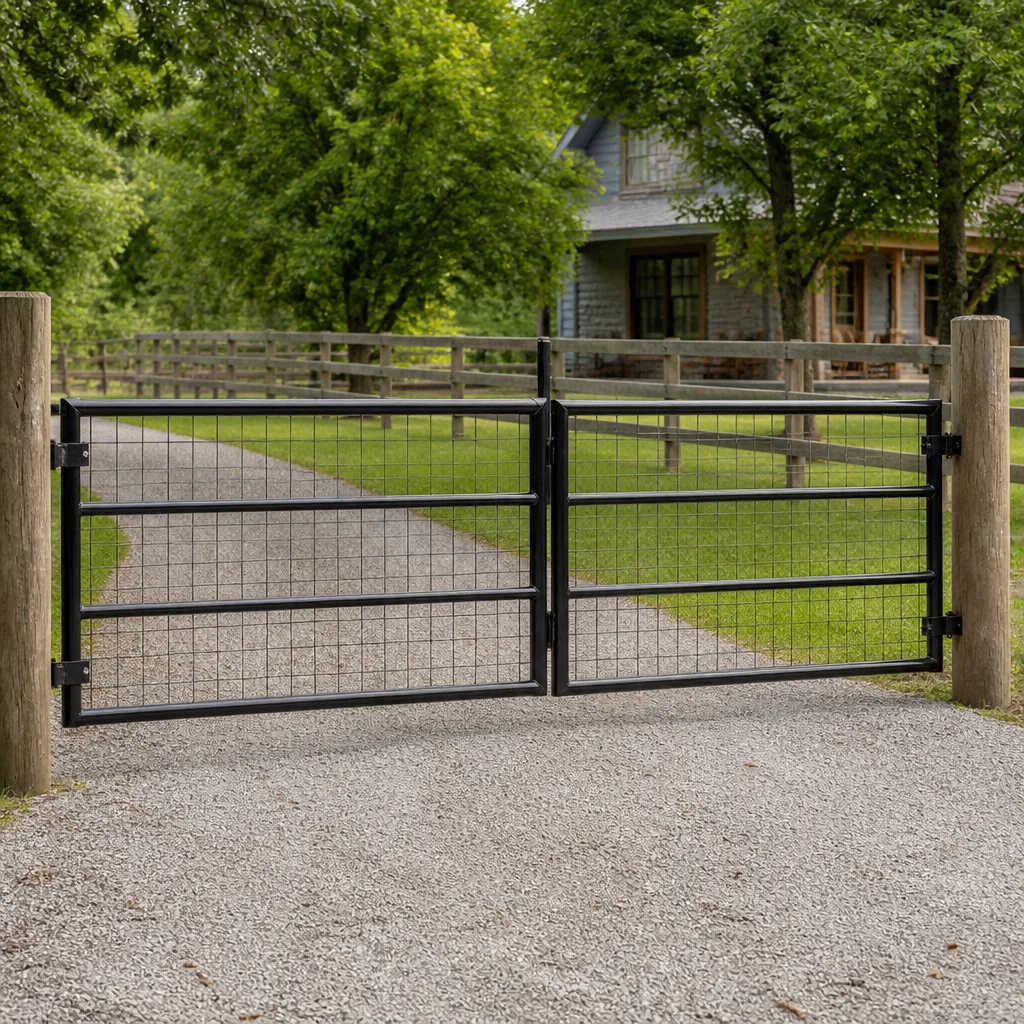 Farm & ranch
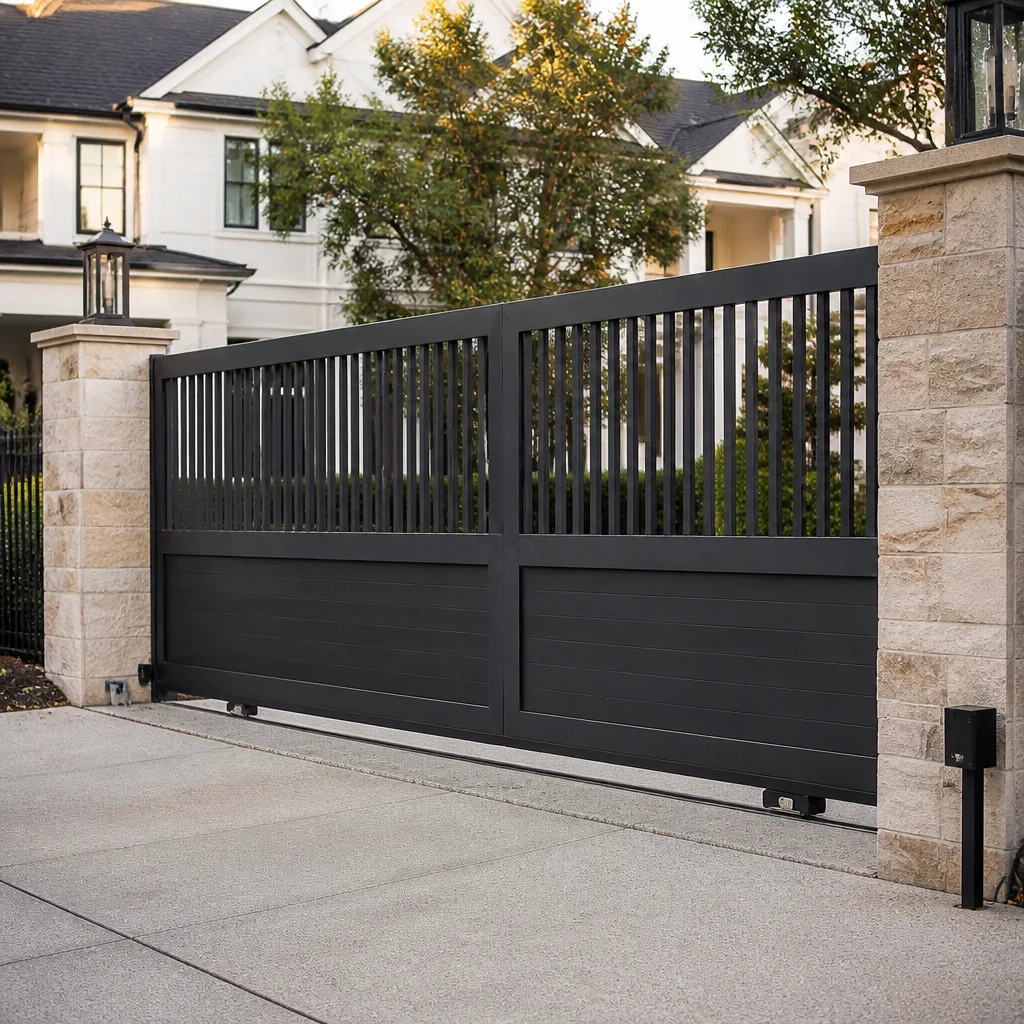 Sliding driveway gates
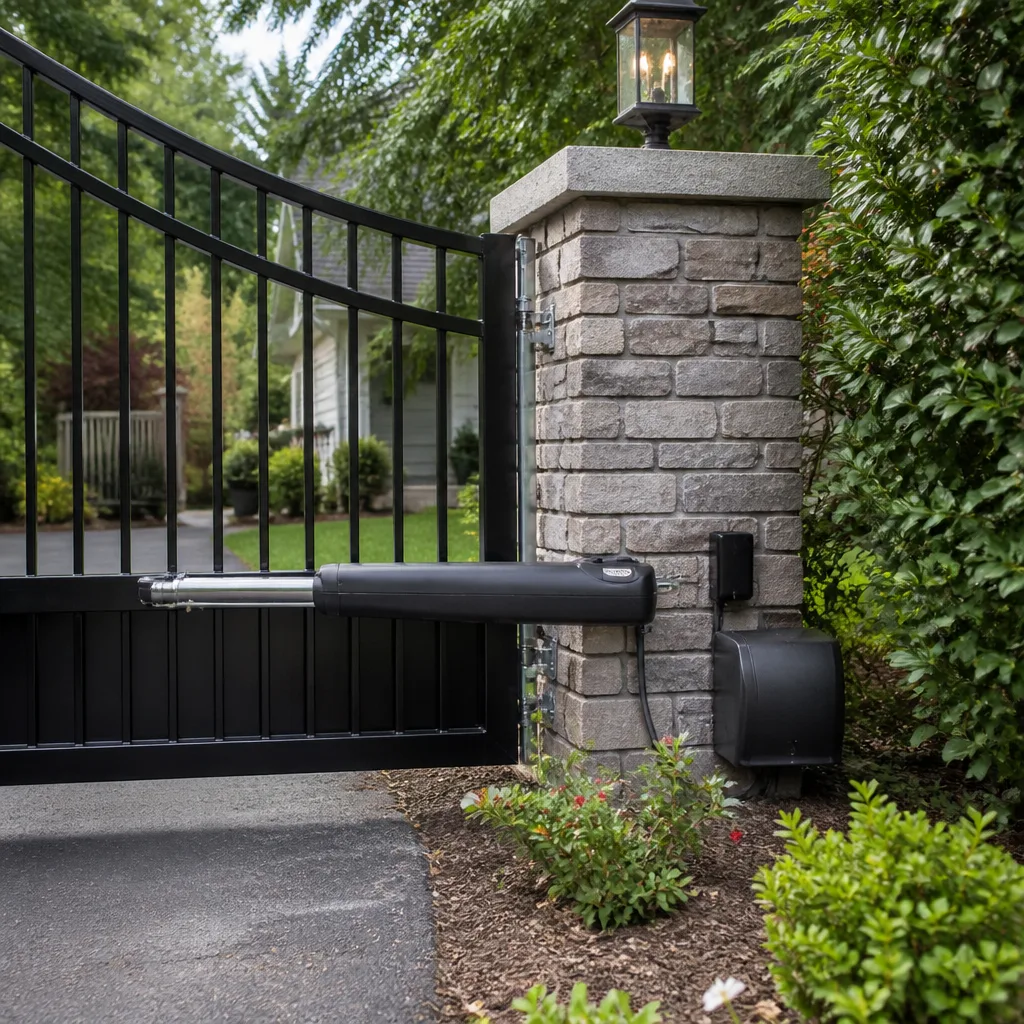 LiftMaster operators
Free on-site gate assessment - hinges, posts, and your LiftMaster or Nice gate operator checked before anything is quoted
The assessment is free and the quote is the invoice.
Get your free estimateHow to Hire a Gate Repair Contractor in Renton: A Step-by-Step Guide
Ask a contractor what error code E4 means on a DoorKing board. If they can’t answer, they’re guessing at your repair, and you’ll pay for that guess later. That sounds harsh, but the gate industry in Washington has no gate-specific licensing requirement, which means the barrier to calling yourself a gate technician is essentially zero. A general handyman with a truck and a willingness to try can advertise the same words a specialist uses.
This guide gives you the questions, documents, and quote details that separate a real gate specialist from a generalist learning on your property. You’ll learn how to vet brand knowledge, what a proper written scope looks like, and the red flags in a bid that most homeowners in Renton never see coming.
Quick Answer
To hire a gate repair contractor in Renton, verify three things before you pay a deposit: proof of insurance, a written scope of work that itemizes parts and labor, and specific answers about your operator brand. Washington doesn’t license gate technicians specifically, so insurance documentation and brand familiarity replace a license check. A contractor who can describe how your BFT or Linear operator behaves across multiple installs is a specialist. One who can’t is guessing.
Styles & brands we work with
- Wrought iron
- Wood & steel frame
- Farm & ranch
- Sliding driveway gates
- LiftMaster operators
Table of Contents
- Why Hiring a Gate Contractor Is Different From Hiring a Handyman
- What Washington’s Lack of Gate Licensing Means for You
- The Three Interview Questions That Reveal Real Brand Experience
- How to Verify Insurance and Credentials
- What a Proper Written Scope of Work Should Include
- Red Flags in Contractor Quotes
- How to Verify OEM vs. Aftermarket Parts
- Final Steps: Deposit, Timeline, and Handoff
Why Hiring a Gate Contractor Is Different From Hiring a Handyman
A gate is a machine, not a fence panel. It has a motor, a control board, safety sensors, and moving parts that interact under load. When it fails, the failure is often electrical or logic-based, not structural. A handyman evaluates problems he can see; a gate specialist diagnoses problems he can measure.
That difference shows up in the diagnosis. A gate that opens partway and stops might have a bad limit switch, a failing capacitor, a motor that’s overheating, or a control board sending a bad signal. Two technicians can look at the same gate and reach different conclusions. Only one of them is checking voltages and reading the operator’s diagnostic codes.
In our experience, the mismatch is most obvious on automated residential gates. A homeowner in Renton calls the person who built their fence, because it’s a gate on a fence line. That contractor installs panels and posts well, but the operator is a separate machine entirely. Linear and Ghost Controls systems both have their own logic, their own wiring standards, and their own failure patterns. Fence-building skill doesn’t transfer to operator diagnosis.
Here’s what changes when you hire a gate specialist:
- Diagnosis time drops. Familiarity with an operator’s quirks shortens the time spent narrowing down the fault.
- Parts get ordered correctly the first time. Brand-specific parts knowledge avoids the “order, return, reorder” cycle.
- Repeat visits are less likely. A fix that addresses the root cause holds; a guess that addresses a symptom comes back.
- Safety systems get tested properly. Loop detectors and safety edges are checked, not assumed to work.
This isn’t about gate repair being harder than other trades. It’s about scope. A specialist works on gates every day, which means the diagnosis happens faster and the fix tends to stick.
What Washington’s Lack of Gate Licensing Means for You
Washington State doesn’t issue a gate-specific contractor license. There’s no exam that proves someone understands gate operators, and no state registry that separates specialists from generalists. Anyone can print “Gate Repair” on a business card.
For hiring, that means two things. First, your vetting tools shift. Since you can’t check a state license database for gate-specific credentials, insurance documentation and brand familiarity become your primary filters. Second, the general contractor registration that legitimate businesses carry is still worth checking. It doesn’t prove gate expertise, but it shows the company is registered and insured to operate.
Ask for these documents before any work starts:
- Certificate of insurance. Ask for both general liability and, if they have employees, workers’ compensation coverage. A contractor without insurance is a repair risk, not a repair solution.
- Business registration confirmation. A registered contractor in good standing shows up in the state’s database. Cross-check the name against the quote.
- Brand certification or training records. Some operators, such as DoorKing and FAAC, require installers to complete product-specific training. Certifications aren’t the whole story, but they’re evidence.
- Written scope of work. What’s covered, what isn’t, and what the parts are. Detailed in the next sections.
We’ve seen homeowners skip this step because the contractor seemed knowledgeable on the phone. Knowledge and documentation aren’t the same thing. The generalist who can talk a good game about your operator is often the one who leaves after collecting a check. Documentation is what holds a job together.
For more on how gate-specific service differs from general contracting here, see our page on Gate Repair Renton.
The Three Interview Questions That Reveal Real Brand Experience
Anyone can claim brand experience. The way to test it is to ask a diagnostic question. A specialist who’s worked on your operator brand will give you a substantive answer without hesitation. A generalist will deflect, promise to “check the manual,” or answer in ways that sound confident but mean nothing.
These are the three questions we suggest asking:
1. “What error code does my operator show when it fails, and what does it mean?”
If your gate is throwing a diagnostic code, ask the contractor to explain it. Every brand encodes failures differently. Error codes on a DoorKing control board point at specific subsystem faults; the same numbers on a Linear board mean something else entirely. A contractor who’s worked with your brand will recognize the code. One who hasn’t will ask you what brand it is, then Google it while you’re standing there.
2. “Have you replaced this actuator or board before, and what typically fails on this model?”
This separates reading-the-manual from knowing-the-model. A technician who’s serviced a Mighty Mule or BFT actuator knows which components usually fail first. They can tell you what the common failure point is on your specific setup. If they answer in generalities (“it could be the motor, or the board, or the sensor”), you’re getting book knowledge, not bench knowledge.
3. “Do you have OEM parts available for this operator, and how long do they take to arrive?”
Aftermarket parts are cheaper and sometimes work. But longevity and fit vary widely between the original part and a substitute. A specialist knows which parts must come from the manufacturer and which can be sourced locally. A generalist will order whatever fits and hopes for the best.
Ask these three questions on the phone before you schedule a visit. The answers tell you whether a site visit is worth the trip. If your gate is electric, our guide to electric gate repair covers the electrical side in more detail.
How to Verify Insurance and Credentials
In a state with no gate licensing, insurance is your safety net. If a technician damages your property or gets hurt on the job, insurance coverage decides who pays. A contractor who can’t produce a certificate is a liability you don’t want on your property.
Here’s the verification process that actually works:
- Request the certificate in writing. Email is fine. A photo of the certificate also works if the policy number and expiration are legible.
- Match the business name. The certificate should name the company you’re hiring, not a generic DBA. If the names don’t match, ask why.
- Check the expiration date. An expired certificate is the same as no certificate. Verify the policy is active as of the work date.
- Confirm liability limits. Ask what the liability limit is. For a residential gate repair, a standard limit covers most damage scenarios. For commercial or multi-tenant gates, you want to know the coverage is real.
- Ask about workers’ comp. If the contractor brings employees, workers’ comp is essential. Without it, an injury on your property can trigger a claim against your homeowner’s policy.
Don’t accept “we’re insured” as an answer. That phrase costs nothing to say and nothing to verify, which means some contractors use it as filler. Ask for the document. The contractor who’s properly insured will send it without hesitation. The contractor who isn’t will find reasons to stall.
For commercial properties and HOAs in Renton, the insurance bar is higher. A commercial gate serving multiple tenants carries coverage and liability that a residential job doesn’t. Ask about commercial-grade coverage explicitly, and confirm the technician dispatched to a commercial site has the insurance level the property requires.
What a Proper Written Scope of Work Should Include
A written scope of work is the difference between a repair and a repair-and-surprise. It should be specific enough that you can hold the contractor to it afterward. If the scope is missing, or written in vague terms, the final bill can drift from the quote.
A proper scope includes:
- Diagnostic findings. What was tested and what failed. Not “gate not working,” but “control board not responding to limit switch input.”
- Part list with brand names and part numbers. The operator model and specific components to be replaced.
- Labor breakdown. Hours estimated and what each hour covers.
- Price with parts and labor separated. A flat total tells you nothing about what you’re paying for. A broken-out estimate tells you exactly what parts cost.
- What’s not covered. If the diagnosis uncovers a second fault, how is that handled and priced?
- Estimated timeline. When the parts arrive, how long the repair takes, and when the gate is back online.
- Sign-off requirements. Who tests the gate and what “working” means.
If the scope is missing or written as a range (“probably around $X to $Y”), that’s a signal. Complex electrical faults especially shouldn’t be quote-flat without a diagnosis. A scope that doesn’t include part numbers is a scope you can’t verify.
Ask specifically: “What part are you replacing, and is it OEM?” If they can’t name the part, they haven’t diagnosed the fault. They’re guessing. Also ask: “How is the price set – per job, by hours, or by parts markup?” A clear answer tells you how the bill works. A vague one tells you it will change.
Red Flags in Contractor Quotes
Most red flags appear before the technician arrives. They show up in how the quote is written, how the contractor answers questions, and what they refuse to itemize.
- Flat-rate bids on complex electrical faults. A control board failure can have multiple causes. A flat quote without a diagnosis means the contractor doesn’t know what’s wrong yet, and the final price will change once they do.
- Refusing to itemize parts vs. labor. You should always see what you’re paying for parts and what you’re paying for labor. A single lump sum hides markup and makes comparison shopping impossible.
- Ordering parts before diagnosis. If the contractor orders a control board before testing the gate, you’re paying for their guess. A proper diagnosis comes first.
- Vague brand claims. “We work on all brands” is filler. A specialist names specific operators and can describe the failure patterns of each.
- Pushy timeline with no written scope. Urgency without documentation is the setup for a larger, unagreed bill.
- No insurance certificate on request. A contractor who dodges the request is a contractor you don’t hire.
- Diagnosis by phone with a single price attached. Nobody can diagnose a gate over the phone with certainty. If they claim to, they’re either guessing or they’re about to charge you for the guess.
One local wrinkle: in the Puget Sound area, contractors get busy fast. A contractor who’s booked out isn’t automatically bad, but one who’s booking immediately without asking a single question about your gate probably isn’t diagnosing it carefully.
We keep our scope of work clear on purpose. If you’re seeing red flags in a competing quote, we’re happy to walk through it with you. See how we handle gate repair.
How to Verify OEM vs. Aftermarket Parts
OEM means the part comes from the original equipment manufacturer. Aftermarket means a third party made it as a compatible substitute. Both can work, but they differ in fit, longevity, and warranty coverage. For a gate operator, the difference matters.
Here’s how to tell what you’re getting:
- Ask for the part number. Every operator has parts with manufacturer part numbers. Write it down and check it against the manufacturer’s catalog, or ask the contractor to confirm the source.
- Ask where it was sourced. Authorized distributors carry OEM. General hardware suppliers often carry aftermarket. Both are legitimate, but the source tells you what you’re buying.
- Ask about the warranty. OEM parts usually carry the manufacturer’s part warranty. That warranty is often void on aftermarket parts.
- Look at the part when it arrives. OEM parts usually carry the manufacturer’s markings. If a part looks different from the original, ask why before it’s installed.
Why this matters for longevity: the parts inside an operator are engineered as a system. A control board expects a certain voltage range from the motor. A substitute motor that draws slightly different current can shorten the board’s life. An aftermarket actuator that fits a BFT arm may work for a season and then fail in ways that take the whole operator with it.
Ask the question directly: “Is this part OEM or aftermarket?” A specialist gives a straight answer. A generalist often doesn’t know, because they’re buying whatever’s in stock.
Final Steps: Deposit, Timeline, and Handoff
Before you pay a deposit, ask four questions. Get answers in writing. If the contractor won’t put answers in writing, the project loses a layer of accountability.
- What’s the deposit for? A deposit covering parts is normal. A deposit covering the entire job up front isn’t. Ask for the deposit amount and what it secures.
- When is the timeline confirmed? Parts lead times vary. Ask for a date, not a range. If the date slips, you should hear about it before the scheduled appointment.
- Who’s the point of contact? The person who came out may not be the person handling the scheduling. Ask who to call if something goes wrong. A single point of contact from diagnosis through installation is a sign of a real operation.
- What’s the handoff? After the repair, who tests the gate and what’s the standard? You should be walked through the repaired function before the technician leaves.
If you’re in an HOA or manage a commercial property in Renton, add a fifth: who handles the communication with the property or the board. Commercial gate jobs have more moving parts, and a single point of contact keeps them moving.
Our technicians have up to 8 years of experience, and we work with BFT, Linear, Viking, Ghost Controls, and other operators in this market. Whether you’re repairing a residential gate or servicing a commercial system, the handoff should be clean on both sides.
Common Mistakes to Avoid
- Hiring the fence builder for a gate problem. Fence skill and operator skill are different trades. When a gate stops moving, the failure is usually electrical or mechanical logic, not posts and panels.
- Accepting a phone quote. A contractor who gives a firm price without seeing the gate is either guessing or planning to change the price later. Expect the estimate after a site visit.
- Skipping the insurance request. In a state without gate-specific licensing, insurance is your only real protection. Ask for the certificate before you schedule.
- Not asking about OEM parts. Aftermarket parts can be fine, but you should know what you’re getting and whether the warranty is affected.
- Paying the full amount up front. A large deposit covering parts is normal. A payment for the entire job before any work has started isn’t.
- Ignoring the diagnostic finding. If the contractor diagnoses one fault and then wants to replace three parts, ask why. Each part should map to a specific test result.
- Letting the gate sit unrepaired during a weather swing. Automated gates that are stuck open or repeatedly cycling will wear down faster. Fix the fault while it’s still a fault.
See the difference
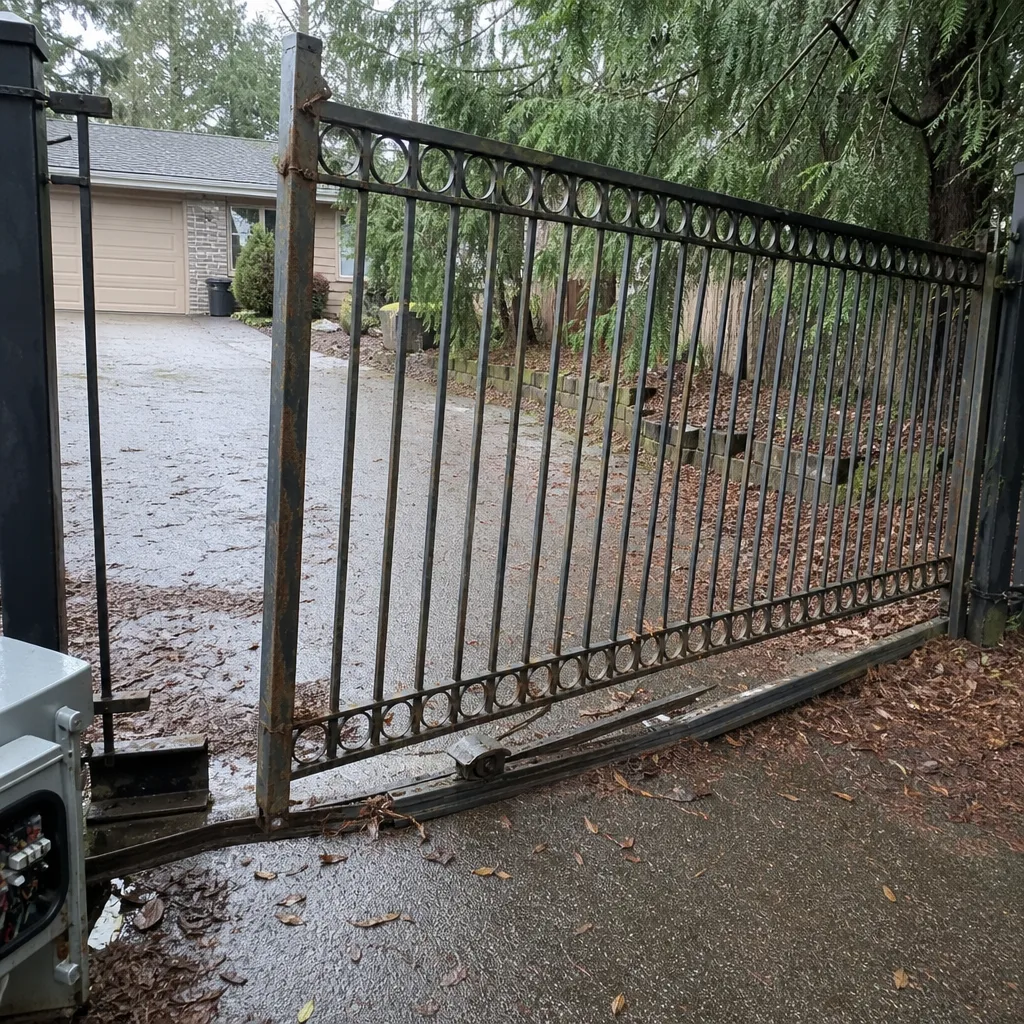 Before
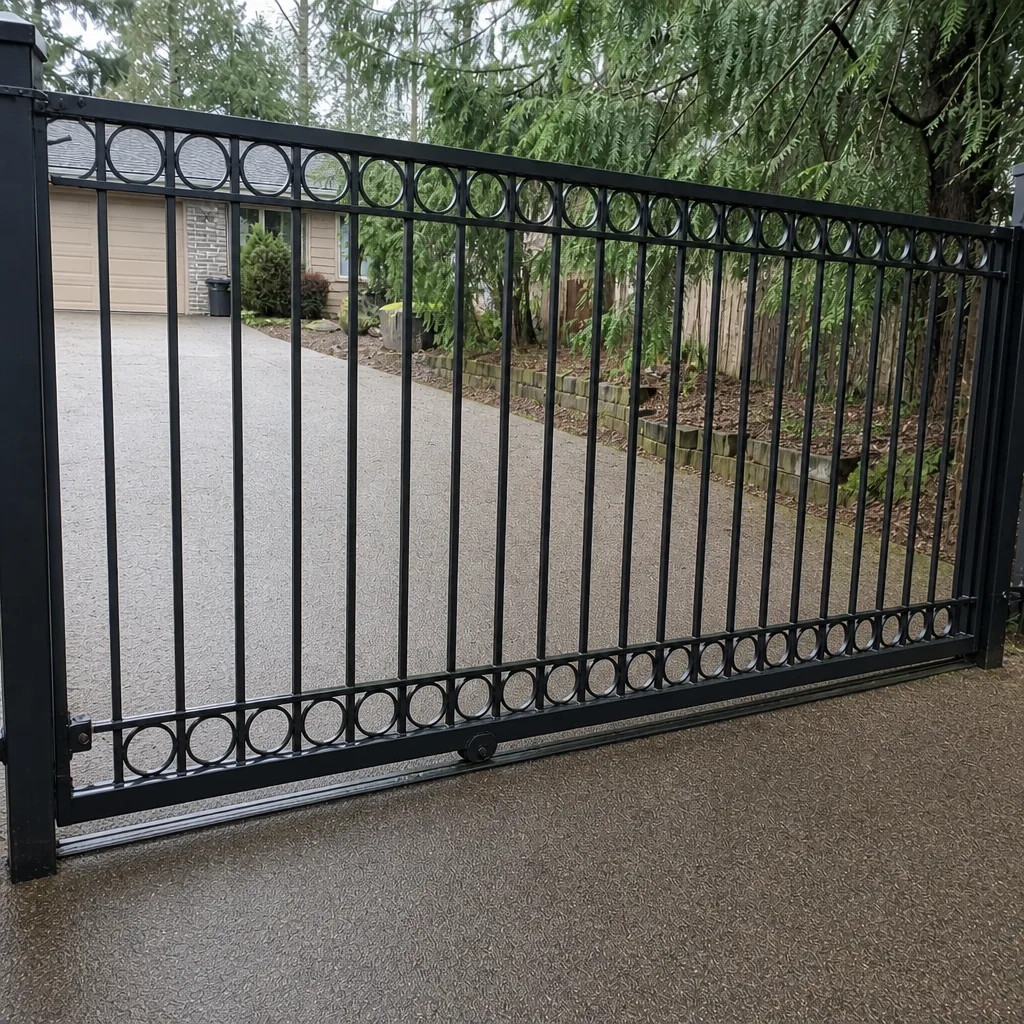 After
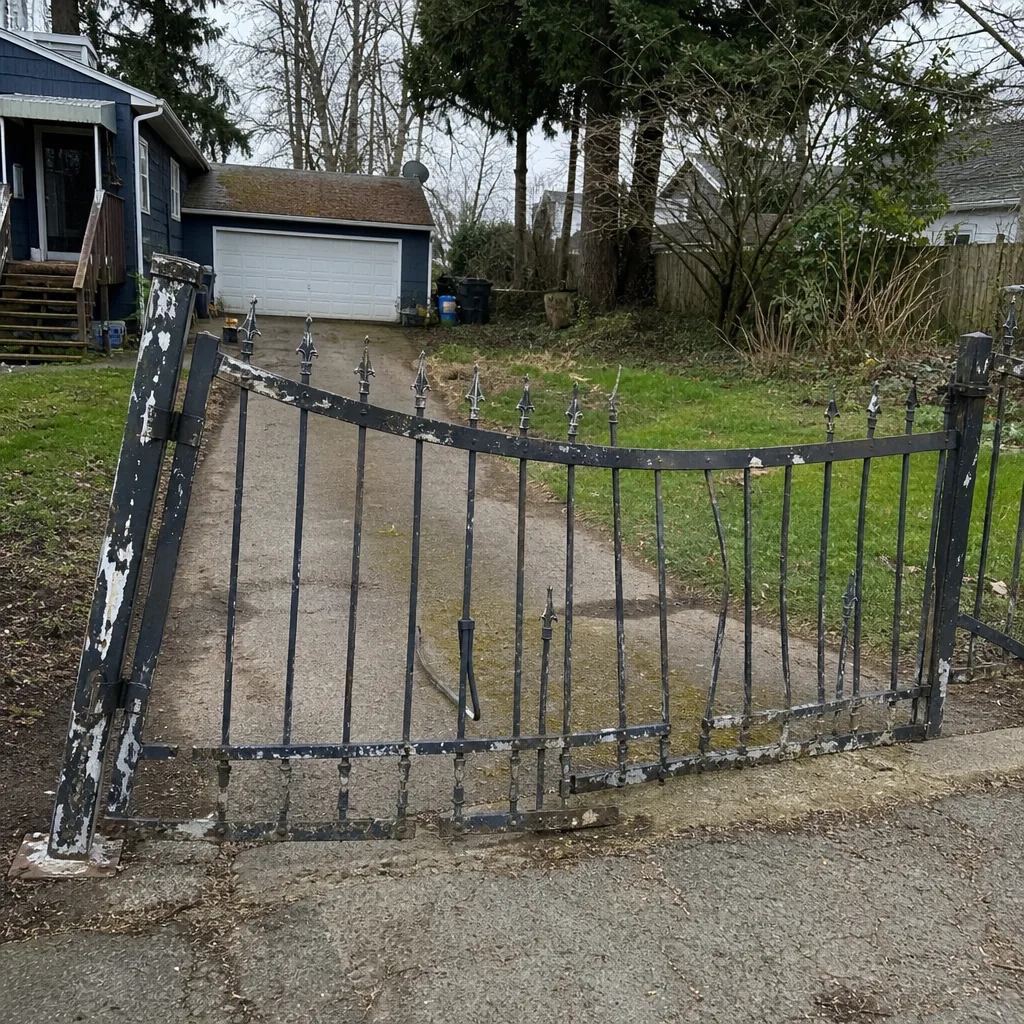 Before
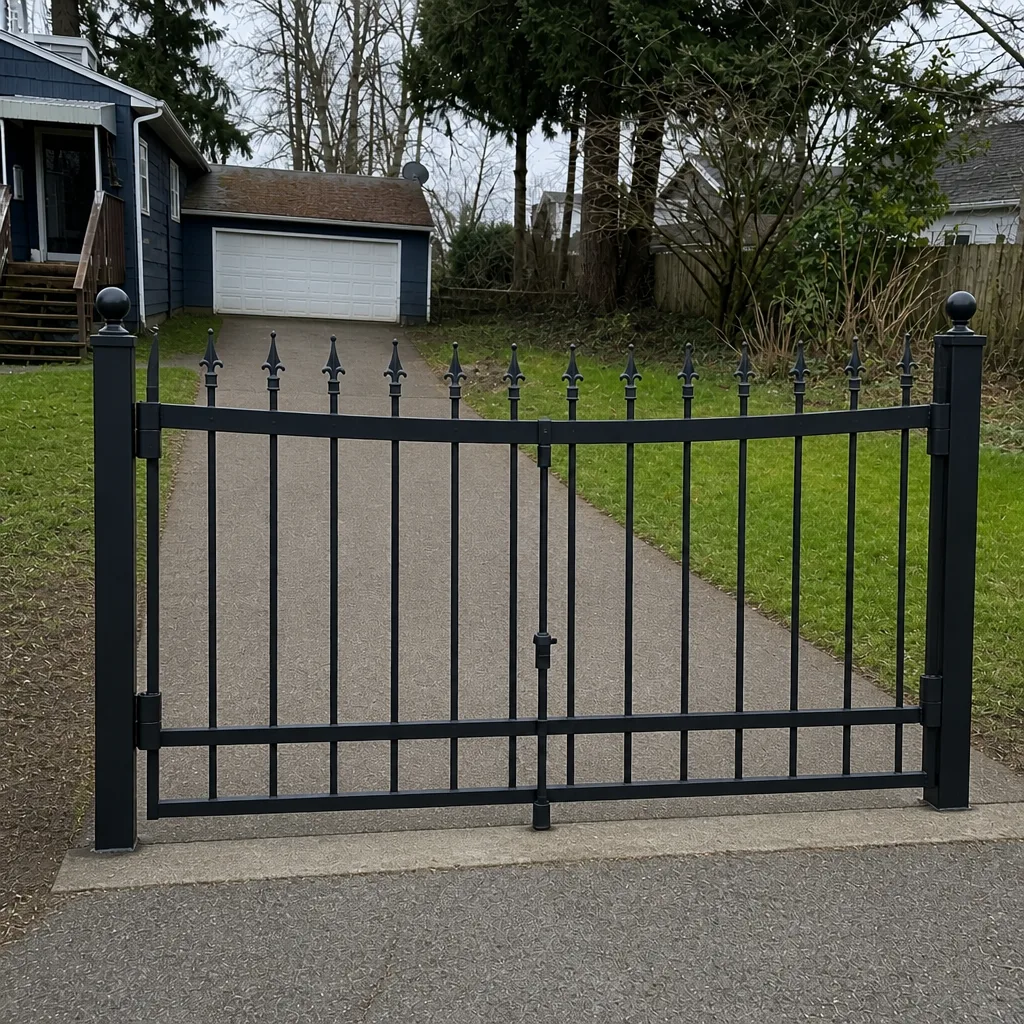 After
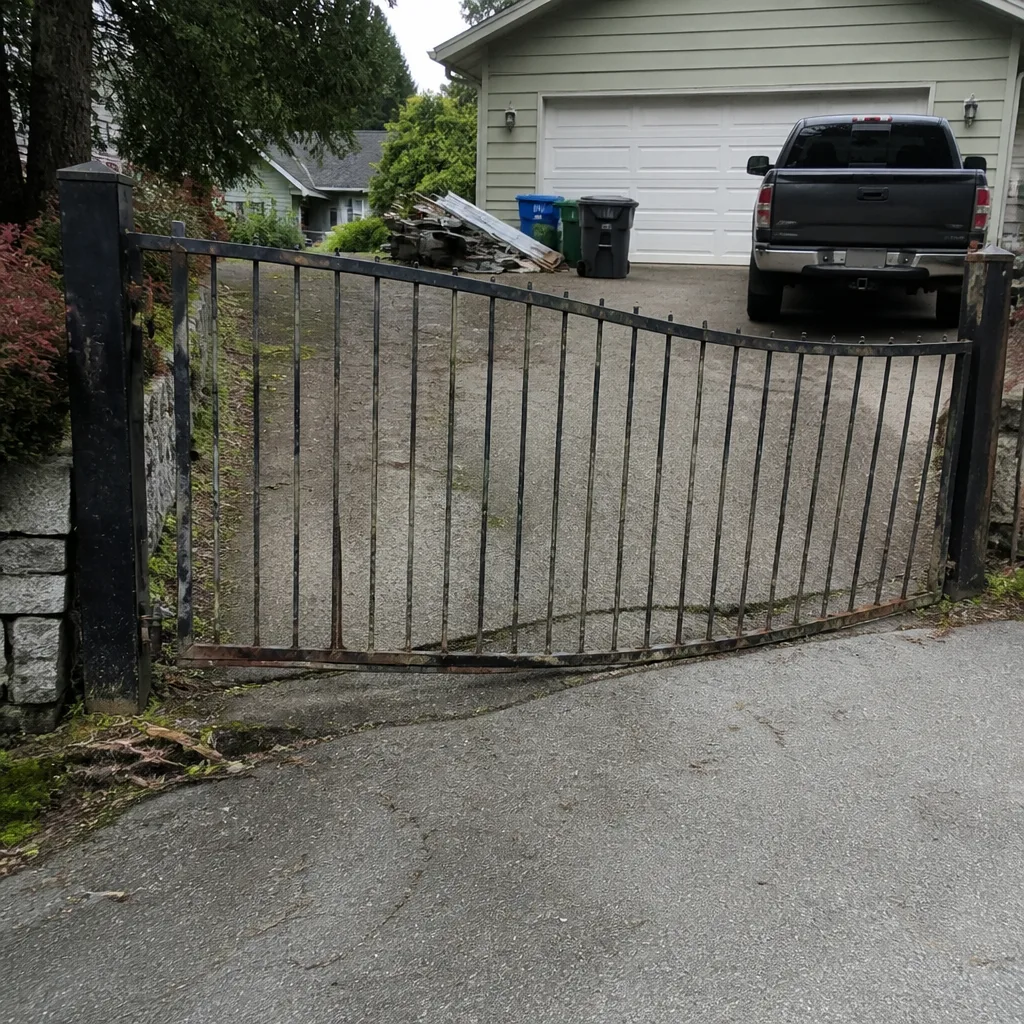 Before
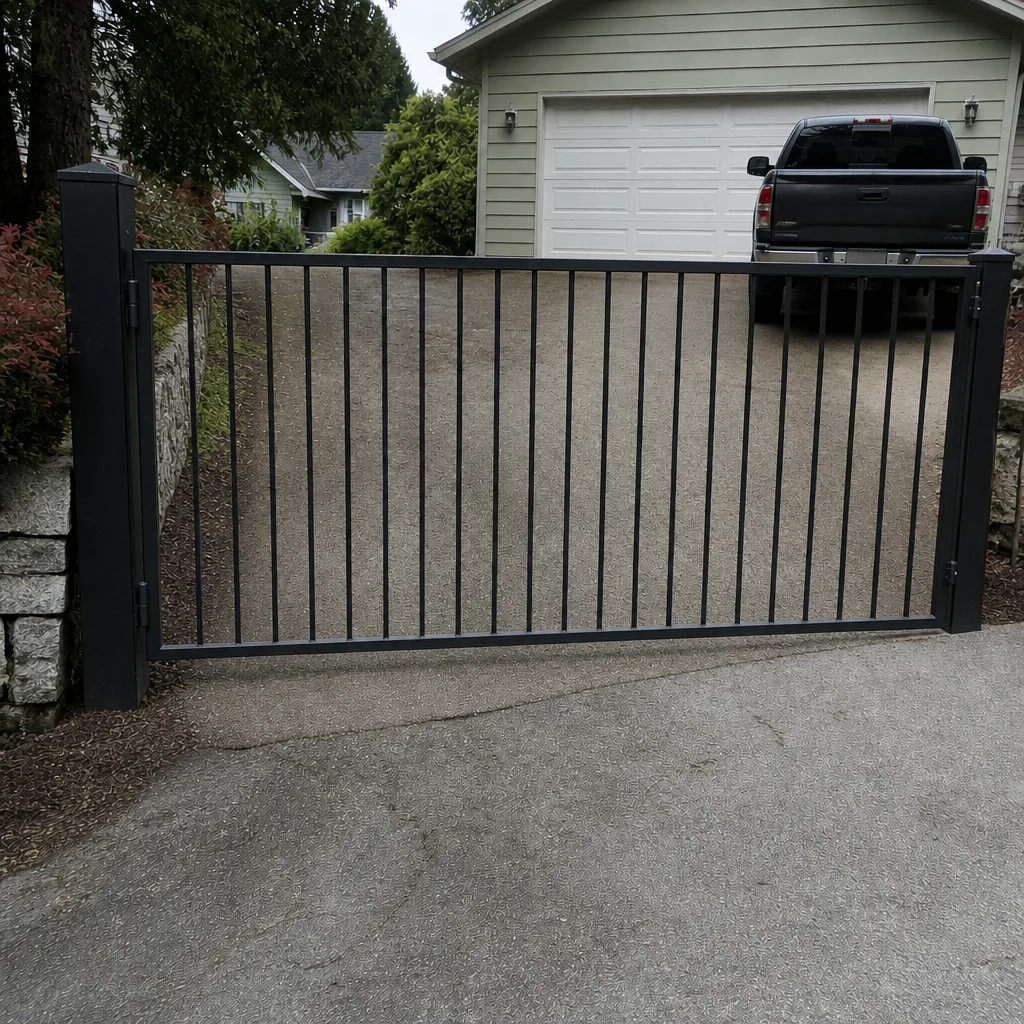 After
When to Call a Professional
Some gate problems are worth diagnosing yourself. Most aren’t. Call a professional when:
- The gate won’t open, won’t close, or reverses unpredictably.
- The operator throws a diagnostic error code you can’t match to the manual.
- Safety sensors or loop detectors have stopped responding.
- The gate is making grinding, clicking, or straining noises it didn’t make before.
- You’ve had a repair done and the same issue is back.
- You need a new gate installation and want the operator matched to the gate and the site.
Do not reset breakers, jump control boards, or bypass safety edges on your own. Operators carry line voltage and, if there’s a backup battery, unexpected stored current. The components inside the control enclosure are not homeowner service items. A safety edge that’s been bypassed to get the gate moving again is a dangerous fix.
Gate Repair Renton offers free estimates in Renton. Call (866) 293-5161. We answer 24/7. Fast dispatch from 7am to 7pm, Sunday through Friday.
Frequently Asked Questions
Washington State doesn’t issue a gate-specific contractor license, so there’s no such thing as a “licensed gate contractor” in the way there’s a licensed electrician. What you can and should verify is that the business is registered, carries liability insurance, and can demonstrate real experience with your operator brand. That combination replaces the credential check you’d do for a licensed trade. Call (866) 293-5161 for a free estimate and ask us about our insurance documentation.
Most residential gate repairs are finished in a single visit once the diagnosis is confirmed and the correct part is on hand. Control board swaps, actuator replacements, and sensor repairs usually run a few hours. The variable is parts availability: OEM parts for a specific operator sometimes need to be ordered, which adds a lead time between the diagnosis and the repair. We set the timeline in the written scope of work so you know what to expect.
Gate repair pricing is set per job by a written estimate after we’ve looked at the gate and diagnosed the fault. Repair costs vary widely based on the operator brand, the part that failed, and whether the fix is mechanical or electrical. A safety sensor replacement and a control board replacement are very different jobs even though both are “gate repair.” We give you a written estimate before any work starts, and the price is agreed before we begin. Call (866) 293-5161 for a free estimate.
We work with LiftMaster, FAAC, BFT, Linear, Viking, Ghost Controls, DoorKing, Elite, and Mighty Mule. That range covers residential operators through commercial-grade systems, which matters for HOAs and multi-tenant properties in Renton that need a single technician who knows their equipment. We don’t claim exclusivity to any brand, and we won’t recommend a brand switch unless there’s a real failure pattern to justify it.
OEM parts are built by the original equipment manufacturer to the tolerances of your specific operator, and they usually carry the manufacturer’s warranty. Aftermarket parts may fit and function, but the tolerances can differ, and the warranty is often void. Inside a gate operator, small differences in voltage draw or travel limits can shorten the life of the surrounding components. The part that’s cheaper up front sometimes isn’t cheaper over the life of the gate.
Yes. We handle gate repair, electric gate repair, and full gate installation, so a repair that turns into a replacement doesn’t require a handoff to a second contractor. That matters for older gates in Renton where the diagnosis sometimes shows the operator is failing beyond a single-part fix. We’ll tell you whether the repair makes sense or whether an installation is the better path, and we’ll quote the installation in writing before anything is ordered.
The Bottom Line
Hiring a gate contractor in Renton comes down to testing for knowledge, not reading reviews. Washington’s lack of gate-specific licensing means brand familiarity and insurance documentation replace the license check you’d do for a licensed trade. Ask about the error code, ask about the specific operator, and ask where the parts come from. Insist on a written scope with parts, labor, and part numbers broken out. Avoid flat quotes, vague brand claims, and contractors who dodge the insurance request. If the answers are specific and the documents check out, you’ve found a specialist. If the answers are vague, walk away before the deposit.
Gate Repair Renton specializes in gates – repair, electric systems, and installation – and we already know the operator brands that come up in Renton. If your gate is down or you’re evaluating a competing quote, call (866) 293-5161 for a free estimate. We answer 24/7. Fast dispatch from 7am to 7pm, Sunday through Friday. Our Renton page has the local details, and you can reach the team directly for help with any gate issue.
Written by the team at Gate Repair Renton.